
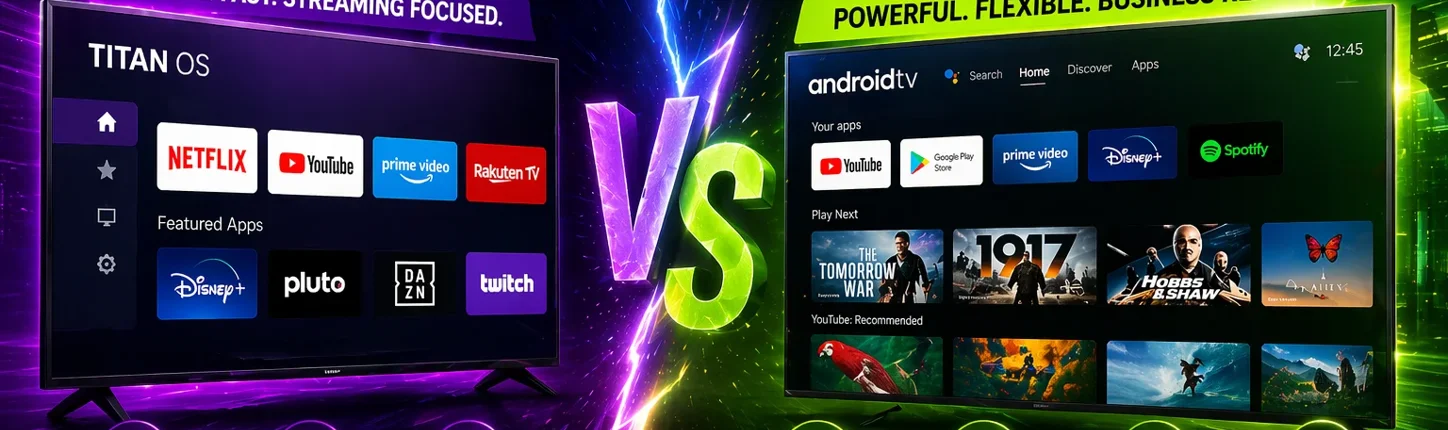
Titan OS vs Android: Which Should You Choose?
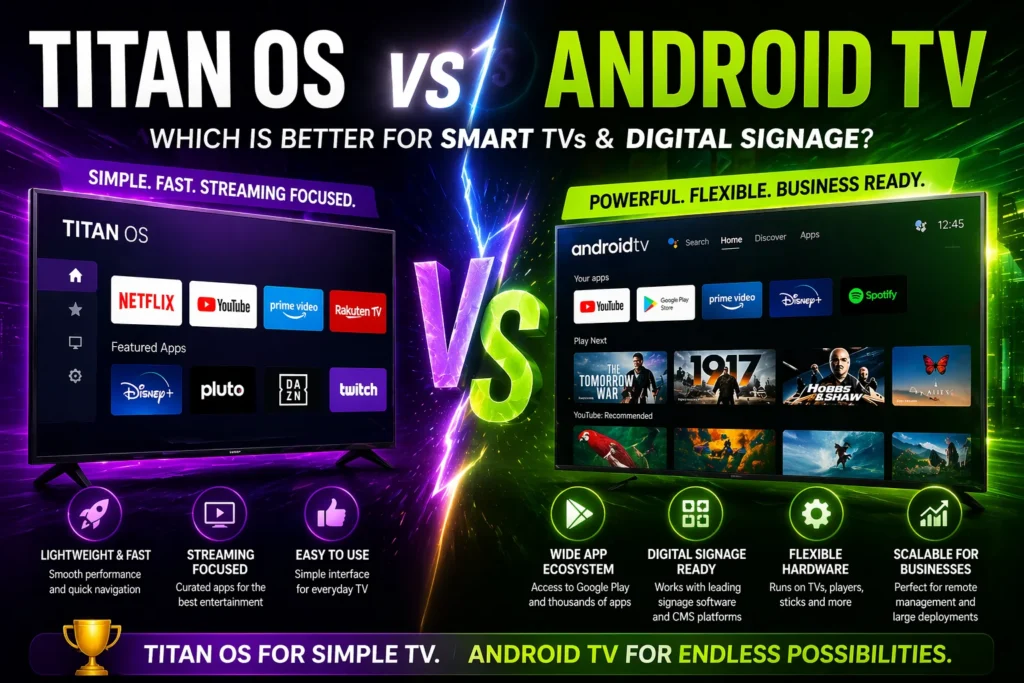
Titan OS and Android TV serve different purposes. Titan OS is designed for simple, fast smart TV experiences with a focus on streaming apps, while Android TV offers a broader ecosystem with more apps, better customization, and stronger support for digital signage software. For most business and scalable deployments, Android is the more powerful option, while Titan OS is better suited for basic use and small setups.
What Is Titan OS?
Titan OS is a newer smart TV operating system used on devices from Philips, JVC, and Vestel. It is designed to deliver a lightweight and fast user experience with a focus on content discovery and curated apps.
Titan OS apps mainly include streaming platforms and entertainment services. The system is optimized for simplicity, which makes it easy to use but also limits its flexibility for advanced use cases like digital signage.
What Is Android TV?
Android TV is a widely adopted smart TV platform developed by Google. It runs on a variety of devices, including smart TVs, media players, and streaming sticks.
Android offers access to the Google Play Store, allowing users to install a wide range of apps, including digital signage software. This flexibility makes Android suitable for both consumer use and business deployments.
Market Share: Titan OS vs Android TV
The difference between Titan OS and Android TV becomes clear when looking at market adoption and scale.
- Android TV (Google TV) is the dominant platform globally, with around ~40% market share worldwide, making it the leading smart TV operating system
- In Europe, Android/Google TV platforms hold roughly 30–32% market share (https://www.advanced-television.com/2026/04/22/forecast-new-tv-os-to-take-28-of-european-market-by-2030/), confirming strong regional dominance
- Titan OS is still in an early growth phase
- It has reached approximately ~5% market share in Europe, driven by adoption from manufacturers like Philips, JVC, and Vestel
- Titan OS is expected to grow further as brands move away from Android-based systems and build their own ecosystems
- Android TV = global scale, dominant ecosystem
- Titan OS = emerging platform with regional growth (Europe)
Android TV dominates the global smart TV market with around 40% share, while Titan OS is a fast-growing but still emerging platform with about 5% share in Europe.
Titan OS vs Android: Key Differences
| Android | Titan OS | |
| App Ecosystem | Android TV provides access to thousands of apps through Google Play, including business tools and digital signage solutions. | Titan OS apps are more limited and primarily focused on streaming and entertainment. |
| Digital Signage Capabilities | Android supports a wide range of digital signage player software and can be used for both small and large-scale deployments. | Titan OS is not optimized for digital signage. It does not provide native support for professional signage workflows like app auto-launch. |
| Hardware Flexibility | Android can run on different types of hardware, including external media players, commercial displays, and low-cost streaming devices. | Titan OS is limited to specific TV manufacturers, which reduces flexibility when scaling deployments. |
| Performance and Use Case | Android performance depends on the device but can handle more demanding applications such as multi-screen signage, automation, and real-time content updates. | Titan OS is optimized for speed and simplicity, making it a good option for basic use. |
| Price | Android devices are significantly cheaper in the most cases. Especially, if it’s set top box. Check the Walmart streaming stick, which can be used in addition to Philips, Vestel, and JVC TVs. Walmart stick – $25 Also consider a regular Xiaomi TV. – $450 | Average Regular Philips TV is $400 |
Can Titan OS Be Used for Digital Signage?
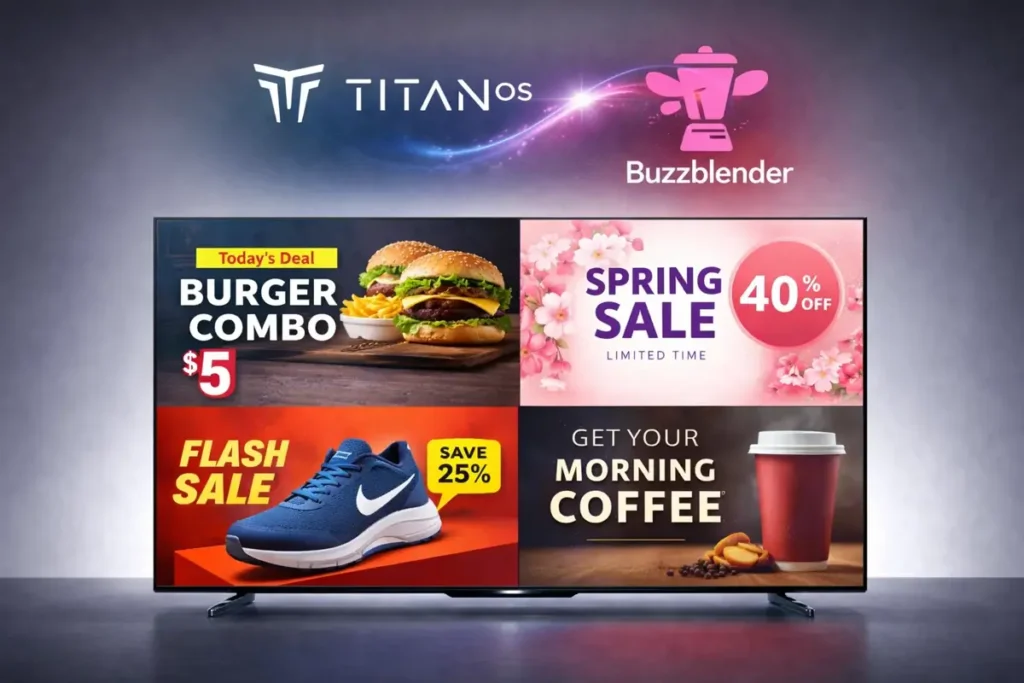
Yes—search for Buzzblender in your TV’s app store. It costs just $5 per screen per month, and it lets you manage the content on your screens remotely at your venue.
When to Choose Titan OS
Titan OS is a good fit if you:
- need a simple smart TV experience
- are using only a few screens
- do not require 24/7 operation
- want a lightweight and easy-to-use system
When to Choose Android
Android is the better choice if you:
- need flexibility and scalability
- plan to use digital signage software
- require remote management
- want access to a wide app ecosystem
Final Verdict
First of all, Titan OS is a fast and simple platform designed for consumer use and streaming apps. But you can use Buzzblender Digital signage app. It works perfectly for small and medium size businesses.
Android TV is a more versatile platform that supports a wide range of applications, including digital signage. For business use cases, Android provides better scalability, flexibility, and long-term value.
FAQ – Titan OS vs Android
Is Titan OS better than Android TV?
Titan OS is simpler and faster, but Android TV offers more apps, better flexibility, and stronger support for business use cases.
Does Titan OS support digital signage software?
Yes, Titan OS supports digital signage through tools like Buzzblender, allowing you to manage content on screens remotely.
Why is Android better for digital signage?
Android supports a wide range of digital signage software, works on different devices, and allows scalable deployments.
What apps are available on Titan OS?
Titan OS primarily offers streaming apps and a limited selection of other applications, making it less versatile compared to Android TV.
Titan OS User Guides
We Support Different Operating Systems
What Our Customers Say
⭐⭐⭐⭐⭐
Finally, a Digital Signage Solution That Works on Titan OS
We run a busy café and needed a simple way to manage content on our Philips TVs with Titan OS — most solutions just didn’t work.
Buzzblender solved that immediately.
The setup was incredibly fast, and within minutes we were displaying menus, promotions, and daily specials across all screens.
For any café or small business using Titan OS, this is by far one of the most practical and reliable digital signage solutions available.
Jeffrey, cafe owner


Leave a Reply