
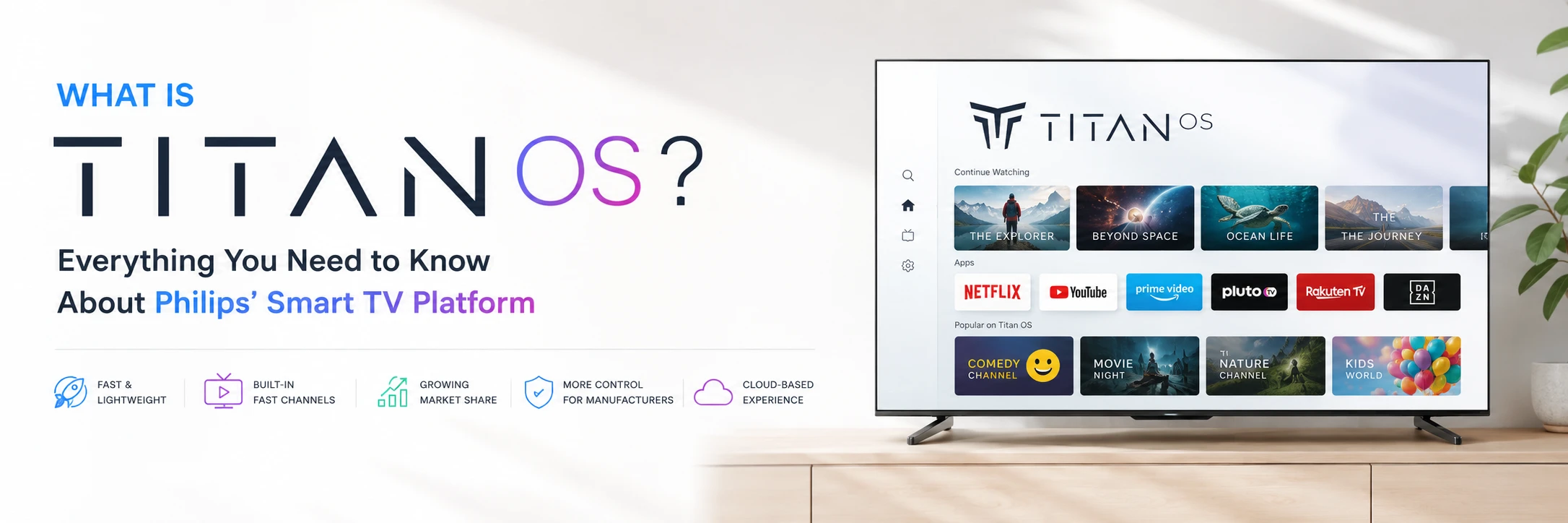
If you’ve recently bought a Philips TV — or are researching smart TV platforms — you’ve probably seen the name Titan OS appear more and more often.
And for good reason.
Titan OS is becoming one of the fastest-growing independent smart TV operating systems in Europe and Latin America, positioning itself as an alternative to Google TV, Android TV, Tizen, and webOS.
But what exactly is Titan OS?
And why are TV manufacturers moving toward it?
What is Titan OS?
Titan OS is a smart TV operating system developed by the European company Titan OS S.L.
It powers modern Philips smart TVs and is expanding to other manufacturers including JVC and AOC in selected markets.
The platform focuses on:
- Streaming content
- FAST channels (Free Ad-Supported TV)
- Personalized recommendations
- Advertising and monetization
- Lightweight TV performance
Unlike Android TV or Google TV, Titan OS is designed to be lighter, faster, and more controlled by TV manufacturers rather than Big Tech ecosystems.
How Titan OS differs from Android TV and Google TV
Titan OS
- Lightweight and cloud-based
- Built around FAST channels and advertising
- Faster on lower-end hardware
- More control for manufacturers
- Focused on Europe and Latin America
Android TV / Google TV
- Larger app ecosystem
- Deep Google integration
- More apps and services
- Heavier hardware requirements
- Dominated by Google ecosystem
Why is Titan OS becoming popular?
One of the biggest reasons is performance.
Many TV manufacturers want:
- Faster interfaces
- Less hardware overhead
- More control over advertising and monetization
- Reduced dependency on Google
Titan OS addresses all of these.
Philips has already announced that all new Philips TVs from 2026 will use Titan OS instead of Google TV.
That’s a major shift in the smart TV industry.
Titan OS market size and growth
The Connected TV (CTV) market is growing rapidly worldwide.
Smart TVs are now the primary streaming device in many households, with around 82% of U.S. households owning a Smart TV in 2025.
The bigger trend here is that TV manufacturers increasingly want independent operating systems instead of relying fully on Google, Amazon, or Roku.
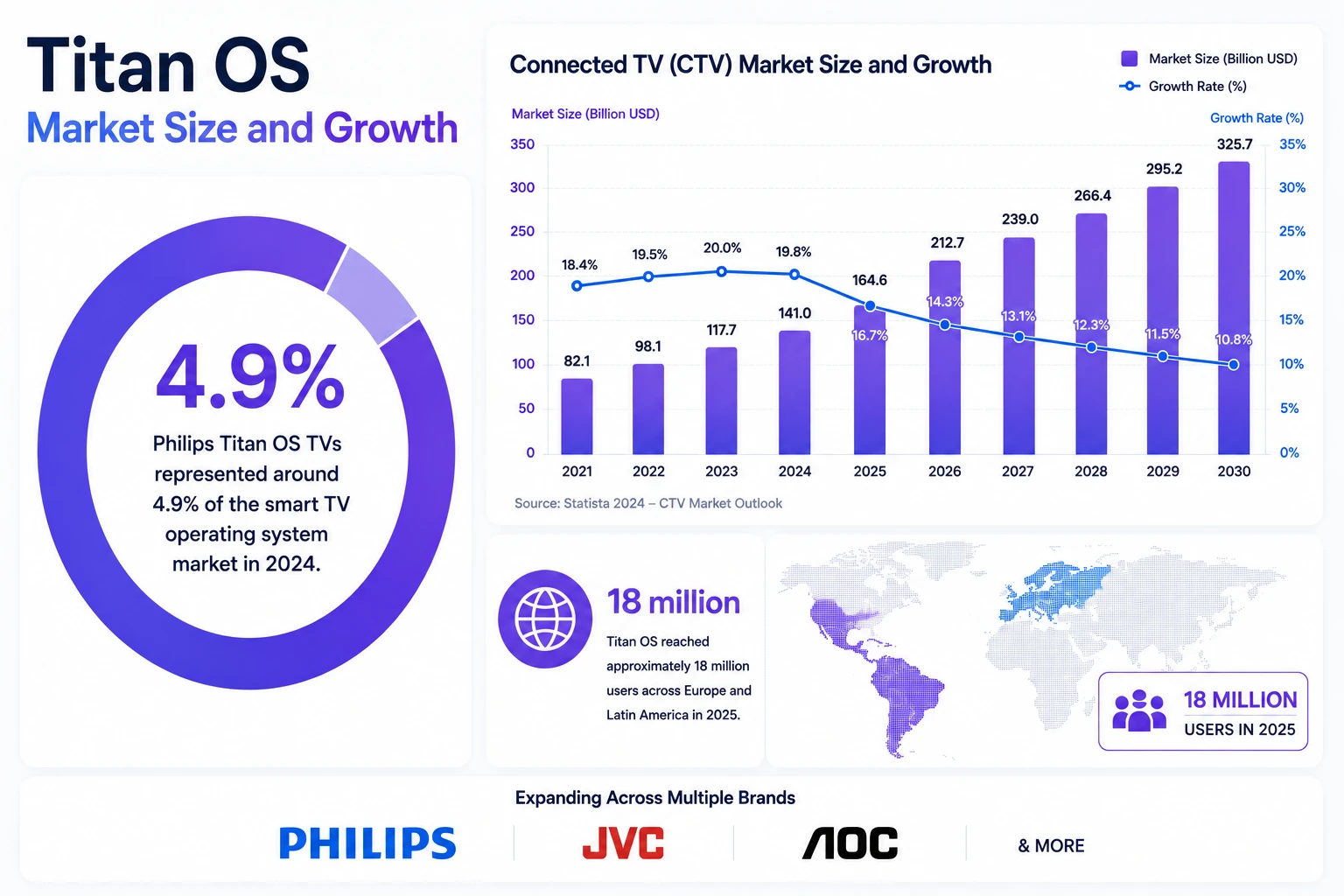
- Titan OS reached approximately 18 million users across Europe and Latin America in 2025.
- Philips Titan OS TVs represented around 4.9% of the smart TV operating system market in 2024.
- The platform is expanding across Philips, JVC, AOC, and other regional TV brands.
Which TVs use Titan OS?
Titan OS currently appears on:
- Philips TVs
- AOC TVs
- Selected JVC TVs
And adoption is expanding rapidly across Europe and Latin America.
Why Titan OS matters for digital signage
This is where things become interesting for businesses.
As smart TV operating systems evolve, more companies want to use TVs for:
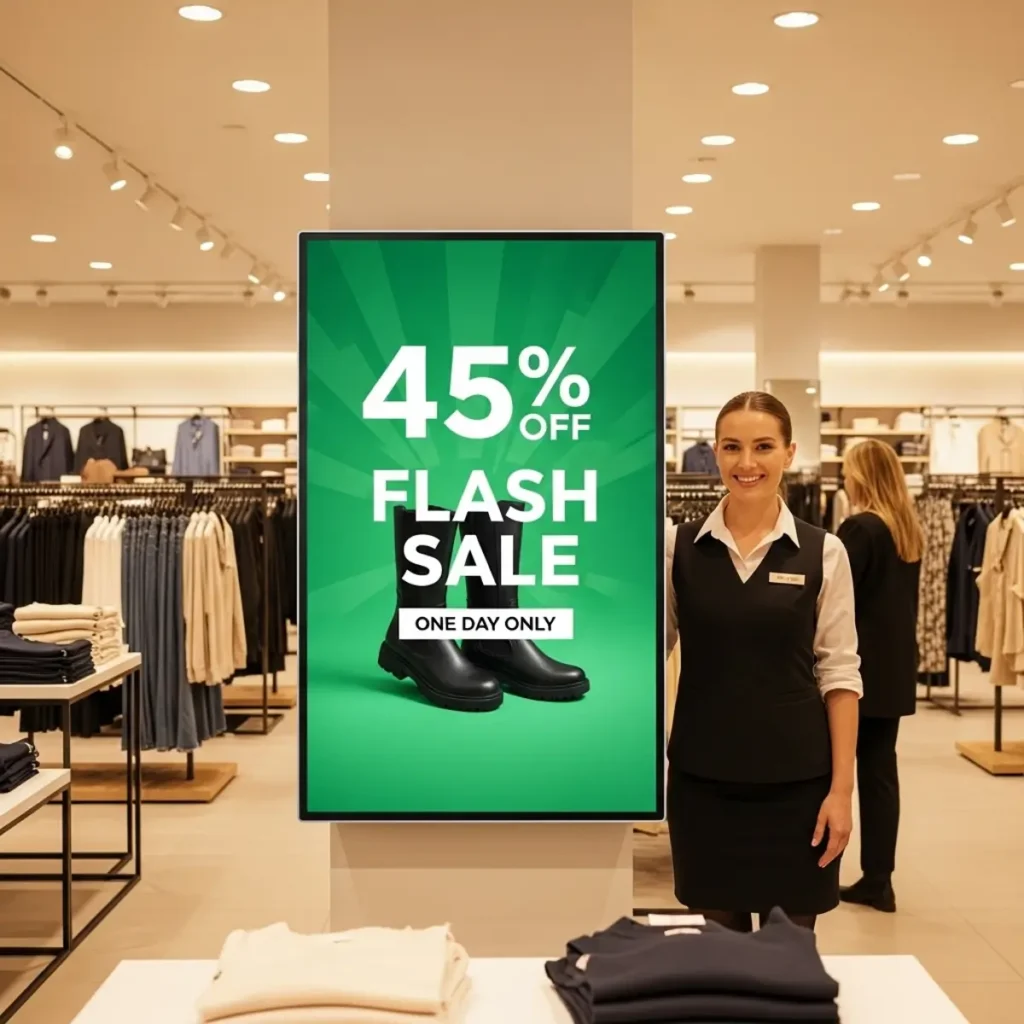
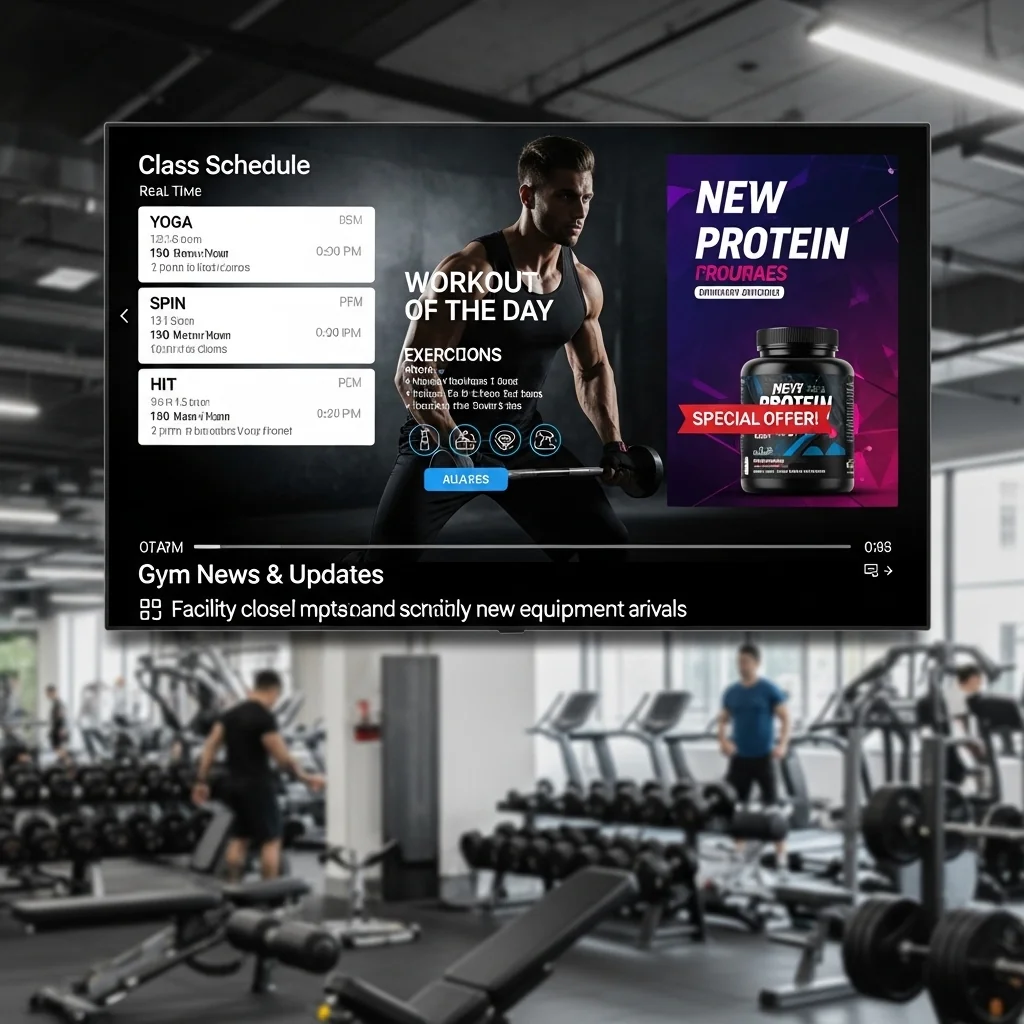
- Digital signage
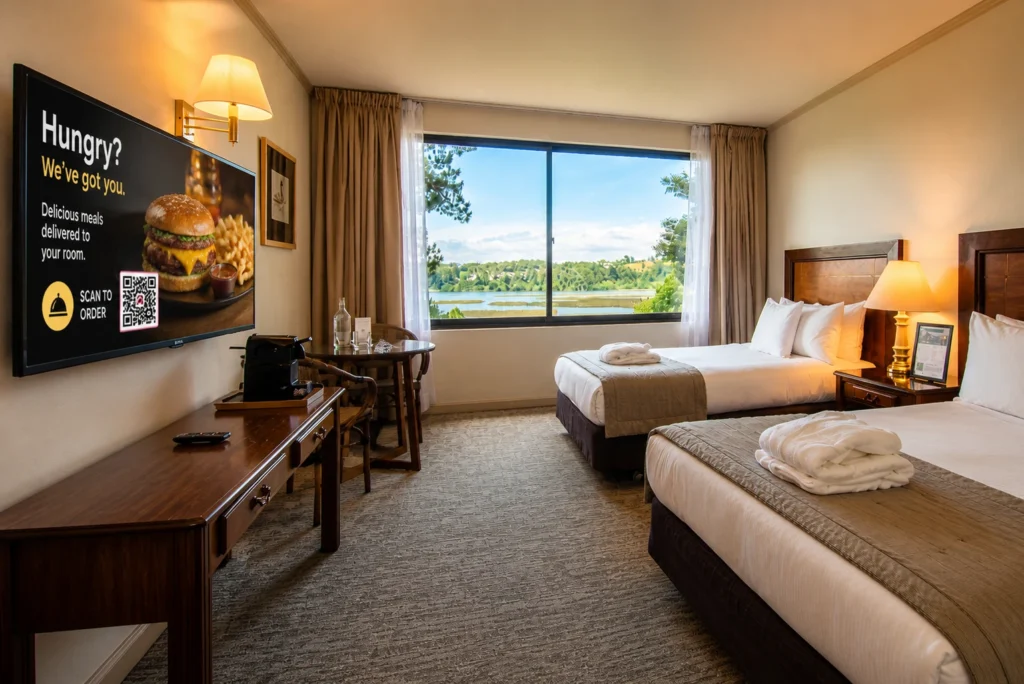
- Hotel mode
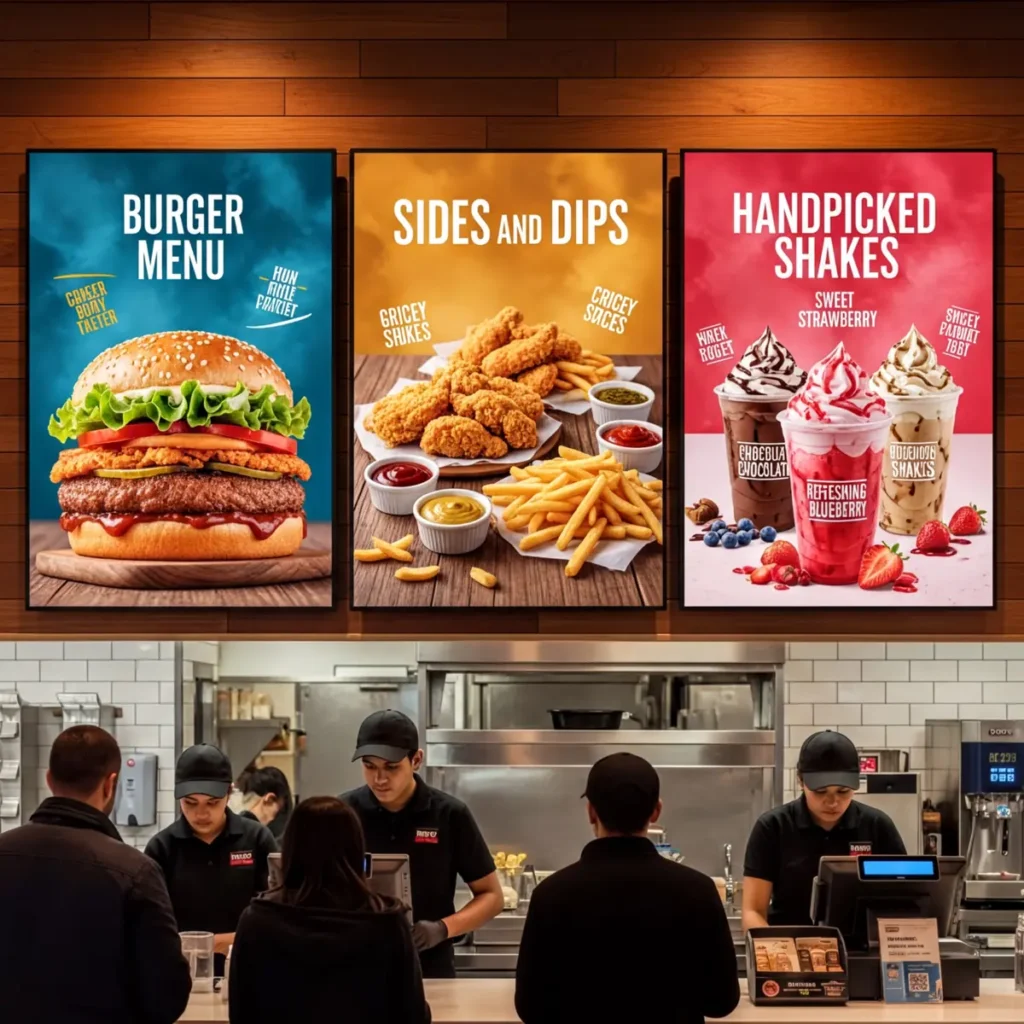
- Restaurant promotions
- Residential building announcements
- QR code menus
- Advertising screens
And Titan OS opens new opportunities because it runs directly on modern smart TVs without requiring heavy hardware.
Buzzblender and Titan OS
Platforms like Buzzblender Digital Signage Software are part of this shift toward lightweight, cloud-based TV experiences.
Instead of using external media players, businesses increasingly want signage solutions that work directly on smart TVs.
That means:
- Faster deployment
- Lower hardware costs
- Easier remote management
- Better scalability
Buzzblender already supports multiple smart TV ecosystems including:
As Titan OS adoption grows, lightweight cloud signage platforms become even more relevant for hospitality, retail, restaurants, and residential buildings.
Take control of your screens today with Buzzblender
The future of Titan OS
Titan OS is still early compared to Android TV or Tizen, but momentum is clearly building.
Philips is betting heavily on it.
FAST channels are growing.
Connected TV advertising continues to expand.
And the market is shifting toward:
- Independent TV operating systems
- Cloud-first experiences
- Built-in advertising ecosystems
- Lightweight smart TV performance
Titan OS sits directly at the center of that trend.
Final thoughts
Titan OS is more than just another smart TV platform.
It represents a broader shift in the smart TV industry:
- More independence from Big Tech
- Faster and lighter TV operating systems
- Growth of connected TV advertising
- Expansion of smart TV-based digital signage
And as the ecosystem grows, businesses will increasingly look for ways to use smart TVs not only for entertainment — but also for communication, promotions, and revenue generation.
That’s where platforms like Buzzblender fit naturally into the future of smart TV experiences.
Manage you screens with ease
FAQ
What is Titan OS?
Titan OS is a smart TV operating system used primarily on Philips TVs. It is designed for streaming, FAST channels, advertising, and lightweight smart TV performance.
Which TVs use Titan OS?
Titan OS is currently available on selected Philips, AOC, and JVC smart TVs, mainly in Europe and Latin America.
Is Titan OS replacing Android TV?
Yes. Philips has announced that future Philips TVs will increasingly transition from Google TV and Android TV to Titan OS.
What makes Titan OS different from Android TV?
Titan OS is lighter and more focused on streaming, FAST channels, and advertising, while Android TV offers a larger app ecosystem and deeper Google integration.
Does Titan OS support apps?
Yes. Titan OS supports streaming apps and smart TV services, although its app ecosystem is currently smaller than Android TV or Google TV.
What are FAST channels on Titan OS?
FAST channels are Free Ad-Supported Streaming TV channels that provide free content supported by advertising. Titan OS heavily focuses on this type of streaming experience.
Can Titan OS be used for digital signage?
Yes. Smart TVs running Titan OS can potentially be used for digital signage, hotel mode, restaurant promotions, announcements, and advertising displays.
What is the Titan OS market size?
Titan OS reached approximately 18 million users across Europe and Latin America in 2025 and continues to expand across multiple smart TV brands.
Why are TV manufacturers moving to Titan OS?
TV manufacturers want more control over advertising, monetization, performance, and user experience without relying entirely on Google or other large ecosystems.
Does Buzzblender work with smart TV platforms?
Yes. Buzzblender supports multiple smart TV platforms including Android TV, LG webOS, Samsung Smart TVs, and browser-based signage solutions.
We Support Different Operating Systems
What Our Customers Say
⭐⭐⭐⭐⭐
From Idle Screens to Increased Sales: Our Digital Signage Success Story
Working with Buzzblender has significantly improved how we communicate with our guests and promote our services.
The team was extremely responsive and supportive throughout the entire process — from onboarding to daily operations. Everything was set up quickly, and we were able to start using digital signage across our hotel almost immediately.
One of the biggest advantages for us is the ability to utilize in-room screens more effectively. When guests are not actively watching TV or streaming platforms like Netflix, we now display targeted promotional content — including room service offers, restaurant specials, beverages, and spa experiences.
This approach has had a direct impact on our revenue. We’ve seen a noticeable increase in spa bookings, as well as higher engagement with our restaurant and in-room dining services.
Catalina, Marketing Director




Leave a Reply