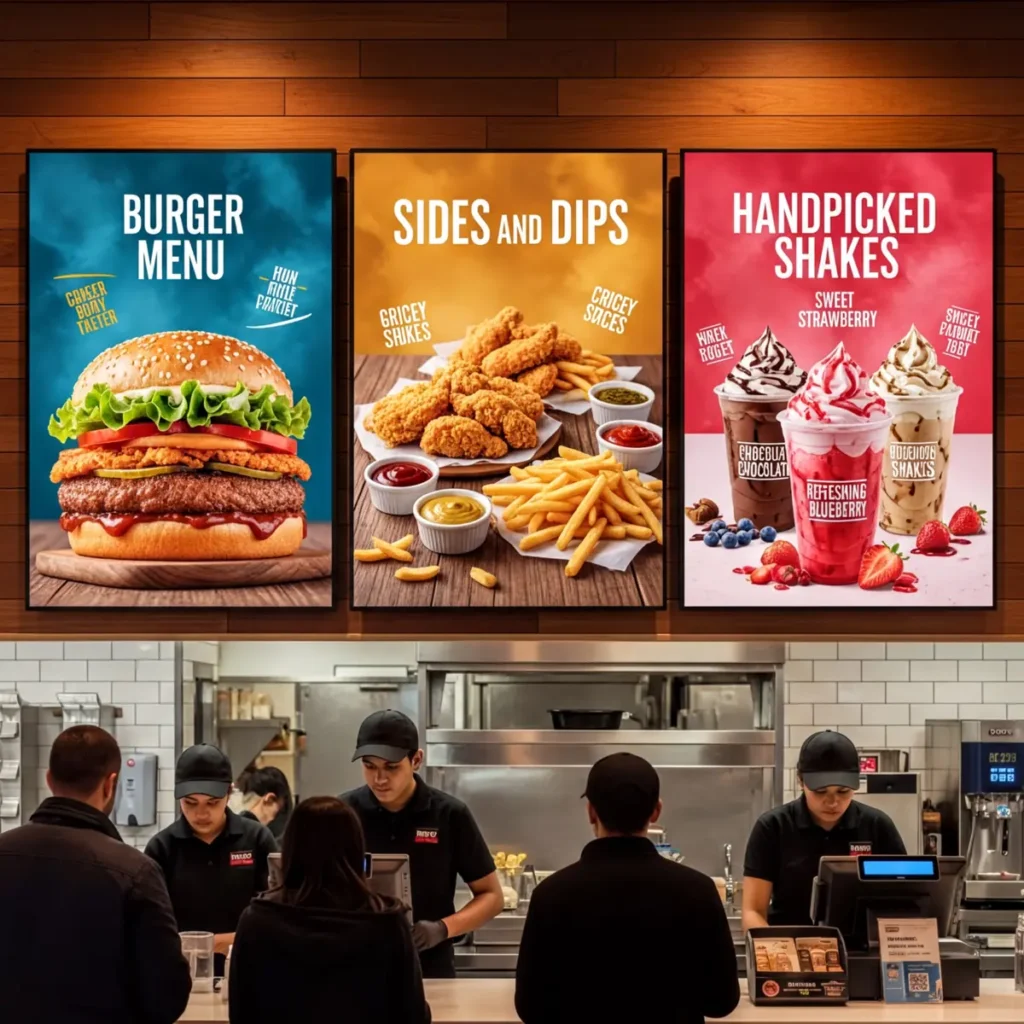
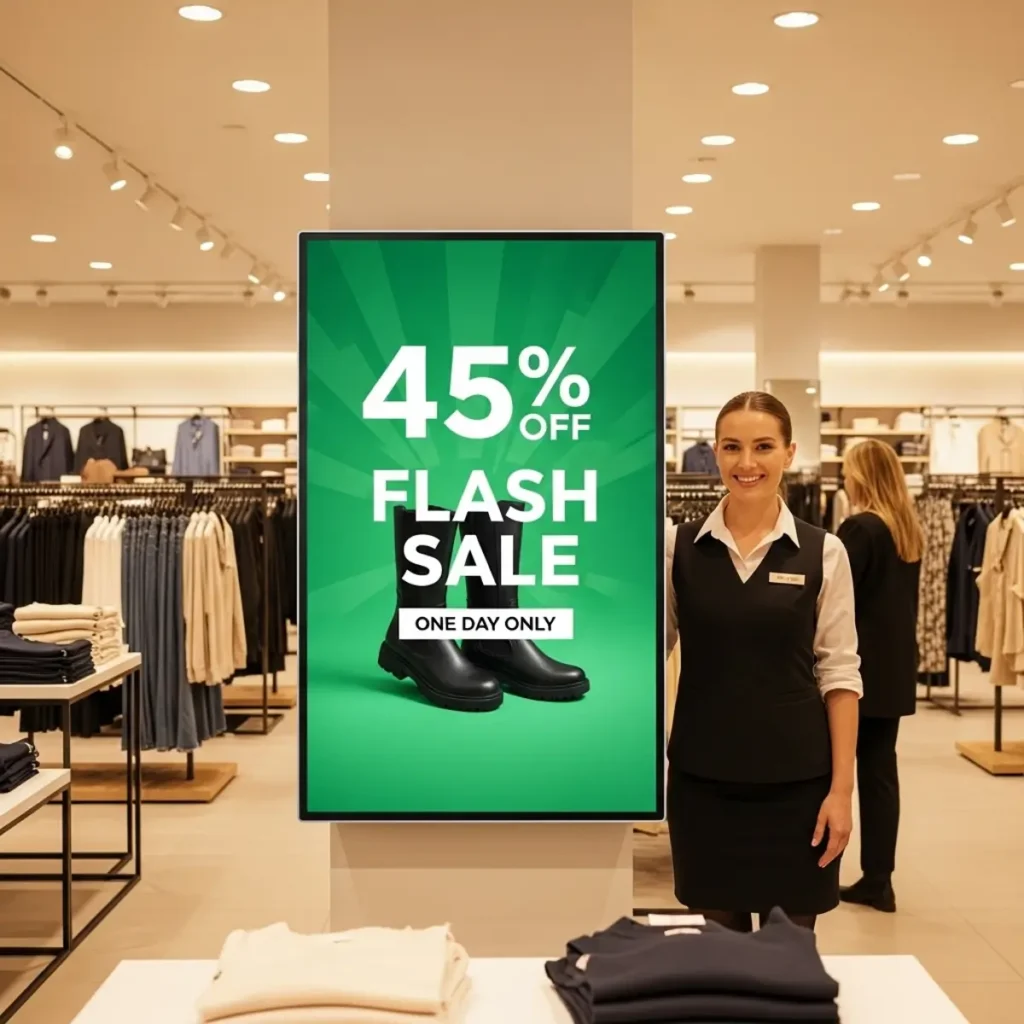
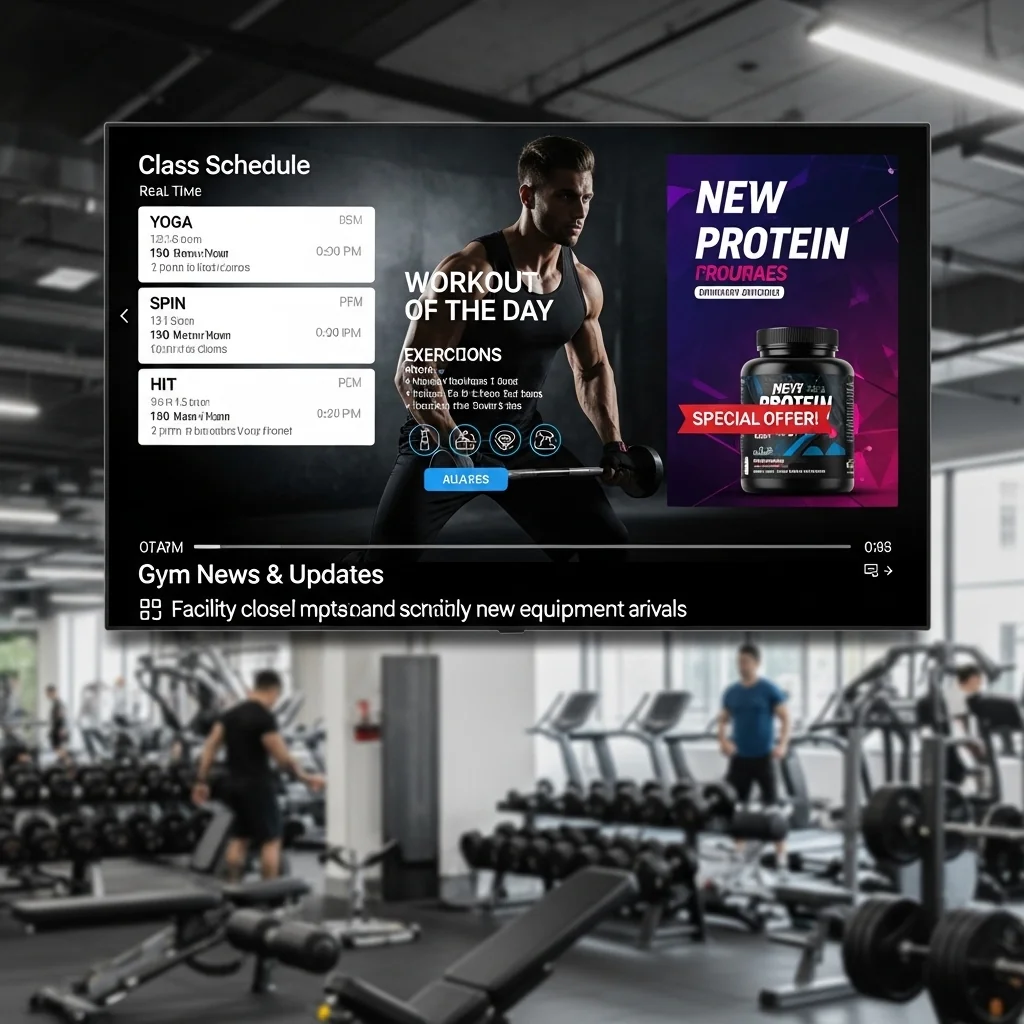
What Is Lottery Digital Signage?
Lottery Digital Signage is the use of digital screens in authorized lottery retail locations and other permitted venues to display lottery-related information such as draw schedules, jackpot information, official results, promotional campaigns, responsible-play messages, retailer communications, and other approved content.
Lottery operators and authorized retailers can use digital signage software to centrally manage screens across individual locations or larger retail networks.
Depending on the jurisdiction, lottery advertising and the information displayed on screens may be subject to specific legal, regulatory, age-restriction, branding, and responsible-gambling requirements.
BuzzBlender is the best choice to get started. Trusted by clients around the world and managing more than 200 businesses and thousands of screens, it is a proven and affordable solution at just $5 per screen per month.
Use the promo code WELCOME100 to get your first month free. Create your account and connect your first screen.

$5 per Screen / Month
One platform. All features included.
Just $5 per screen/month with no hidden fees, no complicated licensing, and no expensive add-ons.
Deploy more screens while keeping costs under control
How Does Lottery Digital Signage Work?
A typical lottery digital signage deployment can include:
- Commercial displays or TVs
- Digital signage players or compatible smart displays
- Digital signage software
- Network connectivity
- Centrally managed playlists
- Approved lottery content
Authorized content is uploaded or supplied to the signage system and assigned to appropriate screens.
A typical workflow might be:
Approved Content → Digital Signage CMS → Retailer Screen Group → In-Store Displays
Content can then be scheduled by location, date, time, campaign, or screen group.
Where Can Lottery Digital Signage Be Used?
Subject to local rules, lottery-related digital signage may appear in authorized locations such as:
- Convenience stores
- Grocery stores
- Supermarkets
- Newsstands
- Authorized lottery retailers
- Dedicated lottery locations
- Other approved venues
Screens are commonly positioned around designated lottery sales areas or other locations approved by the retailer and lottery operator.
What Can Lottery Digital Signage Display?
Depending on applicable regulations and available integrations, screens can present approved content such as:
Jackpot Information
Displays can communicate current jackpot information supplied by an authorized source.
Draw Information
Show approved information about upcoming drawings and schedules.
Official Results
Where supported and permitted, screens can present official results obtained from an appropriate authorized data source.
Lottery Promotions
Display approved campaigns and promotional creative.
Responsible-Play Messages
Responsible-play information can be incorporated into playlists or displayed according to regulatory requirements.
Retailer Communications
Screens may also be used for appropriate store or operator information.
Lottery Results Digital Signage
Displaying lottery results is an important potential use case, but accuracy is critical.
A screen showing results should use an appropriate authoritative data source rather than relying on manually entered or unverified information.
A possible architecture is:
Official/Authorized Lottery Data → Integration → Signage CMS/Player → Display
If live or automatically updating results are required, the digital signage solution needs an appropriate integration with the relevant data provider.
A general-purpose digital signage CMS should not be assumed to provide official lottery-result data by itself.
Lottery Jackpot Displays
Digital displays can make jackpot information more visible than traditional printed materials.
A screen might present:
Current Jackpot
Next Draw
Draw Date
Official Game Branding
The exact information and wording should follow the requirements of the applicable lottery operator and jurisdiction.
Lottery Digital Signage for Convenience Stores
Convenience stores are a common environment for lottery sales in jurisdictions where such sales are permitted.
Digital signage can be positioned near an authorized lottery area and used for approved content.
The same store may also operate separate screens for:
- Food promotions
- Beverages
- Store announcements
- General advertising
- Loyalty programs
Using screen groups allows lottery-specific displays to remain separate from general retail signage where necessary.
Lottery Digital Signage for Grocery Stores
Authorized grocery retailers may operate lottery points alongside their normal retail operations.
A signage network can organize displays by purpose:
Entrance Screens → Grocery Promotions
Department Screens → Product Advertising
Lottery Area → Approved Lottery Information
Checkout Screens → Retailer Communications
This allows one centrally managed signage infrastructure to support different areas without requiring every screen to show the same content.
Lottery Digital Signage Content Scheduling
Lottery-related content may need to change according to a predefined schedule.
For example, approved content could be scheduled according to:
- Draw dates
- Campaign dates
- Day of week
- Time
- Retail location
- Game
- Screen group
Expired campaigns can be configured to stop appearing after their scheduled end date.
Scheduling helps reduce the risk of old promotional creative remaining on screens after a campaign has finished.
Automatic Lottery Content Updates
Large networks benefit from reducing manual content updates.
Where appropriate integrations exist, some information can potentially be updated automatically.
Examples include:
- Approved jackpot information
- Draw schedules
- Official results
- Campaign creative
Automatic data should come from an appropriate trusted source.
This is particularly important for information such as winning numbers or jackpot values, where displaying incorrect information could cause serious customer confusion.
Digital Signage for Lottery Retail Networks
A lottery operator, distributor, or authorized retail network may need to manage screens across many locations.
A signage CMS can organize compatible devices into a hierarchy such as:
Network → Region → Retailer → Store → Screen
This enables centralized content distribution while still allowing campaigns to be targeted geographically.
Multi-Location Lottery Digital Signage
For larger deployments, content can potentially be organized at several levels.
Network-Wide Content
Approved campaigns distributed across participating locations.
Regional Content
Information or campaigns applicable to a particular market.
Retailer Content
Content intended for stores belonging to a particular retailer.
Store-Specific Content
Individual locations can receive appropriate local content.
Screen-Specific Content
Specific displays can be assigned dedicated playlists.
Lottery Digital Signage and Offline Playback
Retail environments do not always have perfectly reliable internet connectivity.
For ordinary approved media content, digital signage players that support local caching can download files in advance and continue playback during a temporary connection outage.
A typical model is:
CMS → Internet → Player Storage → Screen
When connectivity returns, the player can receive new content and schedules.
However, cached jackpot values or results can become outdated. Time-sensitive lottery information should therefore have appropriate freshness controls and fallback behavior.
What Happens If Lottery Data Becomes Outdated?
This should be considered when designing the system.
For example, if an external jackpot-data feed becomes unavailable, continuously displaying the last received value may incorrectly imply that it remains current.
A safer implementation might:
- Monitor data freshness
- Display the last-update time where appropriate
- Stop showing stale dynamic information
- Switch to approved fallback content
- Alert administrators
The appropriate behavior depends on the lottery operator’s requirements.
Lottery Digital Signage and Digital Menu Boards
Retailers may operate lottery signage alongside other digital displays.
For example, a convenience store might use:
- Lottery information screen
- Digital food menu
- Beverage promotion screen
- Checkout advertising
- Store announcement screen
A centralized signage platform can simplify management by allowing administrators to organize each type of screen separately.
Lottery Digital Signage and Advertising
Where permitted, digital displays can provide a flexible alternative to static lottery advertising.
Digital signage allows approved campaigns to:
- Rotate automatically
- Start on a specific date
- End automatically
- Target selected locations
- Change without replacing printed posters
- Combine video and static creative
All advertising should comply with applicable lottery and gambling advertising rules.
Responsible-Play Messaging
Responsible-play communication can be an important component of lottery signage.
Depending on jurisdiction and operator requirements, screens may need to include approved messages concerning:
- Minimum participation age
- Responsible participation
- Problem-gambling resources
- Terms and conditions
- Appropriate legal notices
Requirements vary significantly between jurisdictions, so operators should use locally approved content rather than generic compliance language.
Lottery Digital Signage Compliance
Lottery operations are regulated differently around the world and often differently between states, provinces, or other jurisdictions within the same country.
Before deploying signage, operators should determine applicable requirements concerning:
- Advertising
- Age restrictions
- Responsible-play messaging
- Promotional claims
- Jackpot presentation
- Results
- Brand guidelines
- Placement
- Data sources
- Accessibility
- Record keeping
Digital signage software provides a content-distribution mechanism; it does not itself make a lottery campaign legally compliant.
Why Choose Buzzblender for Lottery Digital Signage?
Buzzblender provides a simple cloud-based platform that can be used to manage compatible screens across authorized retail environments.
Only $5 Per Screen Per Month
Buzzblender costs just $5 per screen per month, making the software cost predictable when deploying a large retail screen network.
Centralized Content Management
Manage approved signage content across compatible displays from one platform.
Content Scheduling
Schedule approved:
- Promotional creative
- Videos
- Images
- Retailer communications
- Responsible-play messages
- Informational content
Screen Groups
Organize displays by:
- Region
- Retailer
- Store
- Screen type
- Campaign
Multi-Location Management
Manage compatible displays across a distributed retail network.
Remote Content Updates
Update approved content without manually visiting each store.
Broad Device Compatibility
Buzzblender can support compatible deployments using:
- Android
- Windows
- LG webOS
- Samsung Tizen
- Commercial displays
- Media players
Offline Playback
Compatible player deployments can use locally stored media so ordinary scheduled content can continue playing during temporary connectivity interruptions.
Buzzblender for Large Lottery Retail Networks
Per-screen software costs become particularly important as a signage network grows.
At $5 per screen per month, a network of:
100 screens = $500/month
500 screens = $2,500/month
1,000 screens = $5,000/month
5,000 screens = $25,000/month
This straightforward pricing model makes it easier to estimate the CMS component of a large deployment.
Hardware, connectivity, installation, content production, integrations, support, and any third-party data services would be separate considerations.
Lottery Digital Signage Hardware
Hardware requirements depend on the environment.
Commercial Displays
Useful for permanent high-use retail installations.
Existing TVs
Compatible televisions may be used with an external digital signage player in suitable environments.
Android Players
Compact Android players can provide an economical option for many distributed retail installations.
Samsung Tizen Displays
Compatible Samsung commercial displays can potentially run signage applications directly on their built-in Tizen platform.
LG webOS Displays
Compatible LG commercial signage displays can similarly use their integrated webOS platform.
Windows Players
Windows can be appropriate where more specialized applications or integrations are required.
Lottery Digital Signage vs Printed Posters
Digital Signage
- Remote updates
- Multiple campaigns
- Video and animation
- Scheduled content
- Automatic campaign expiration
- Centralized network management
Printed Posters
- No digital player required
- No network dependency
- Static content
- Physical distribution required
- Manual replacement
Lottery retailers may use both, depending on operator requirements.
Lottery Digital Signage vs Lottery Terminal
A digital signage display and a lottery terminal are fundamentally different systems.
Digital Signage
Designed primarily to display content.
Lottery Terminal
A specialized transactional system used by authorized operators for functions such as processing permitted lottery transactions.
A general digital signage system should not be presented as a replacement for an authorized lottery terminal.
Security Considerations
Large lottery screen networks should use appropriate security practices.
Consider:
- Administrator permissions
- Account security
- Device authorization
- Network security
- Content approval processes
- Auditability
- Data-source integrity
- Remote device management
Incorrect or unauthorized content appearing across a large retail network can have significant consequences, so access should be limited to appropriate users.
Best Practices
- Use only approved lottery content and authoritative data sources.
- Organize screens by retailer and location.
- Schedule campaign start and expiration dates.
- Establish fallback content for data-feed failures.
- Monitor the freshness of dynamic information.
- Keep text readable from the expected viewing distance.
- Separate lottery screens from unrelated retail playlists when appropriate.
- Use commercial hardware for demanding installations.
- Maintain appropriate user permissions.
- Verify local advertising and responsible-play requirements.
- Test integrations before large-scale deployment.
- Monitor screen and player status remotely.
Common Mistakes
Manually Entering Time-Sensitive Results
Manual entry increases the risk of errors. Official or authorized integrations are preferable when automated results are required.
Displaying Stale Jackpot Information
Time-sensitive data needs freshness monitoring.
Forgetting Campaign Expiration
Promotional content should stop automatically when a campaign ends.
Assuming One Compliance Policy Works Everywhere
Lottery regulations can vary significantly by jurisdiction.
Treating Signage as a Lottery Terminal
Digital signage displays information; it does not replace specialized authorized transactional systems.
Depending Entirely on Streaming
Locally cached media can improve reliability for ordinary content when store connectivity is unstable.
Take control of your screens today with Buzzblender
Frequently Asked Questions
What is lottery digital signage?
Lottery digital signage uses centrally managed screens in authorized retail and other permitted environments to display approved lottery information, promotions, jackpot information, draw schedules, official results, responsible-play messages, and related content.
Can digital signage display lottery results?
Yes, where legally permitted and when the system has access to an appropriate authoritative data source.
Can jackpot information update automatically?
Potentially. Automatic updates require an appropriate integration with an authorized or trusted data source.
Can lottery digital signage work offline?
Previously downloaded ordinary media can continue playing when supported by the signage player. Time-sensitive information such as jackpot values or results requires additional safeguards against displaying stale data.
Can different stores display different lottery content?
Yes. Screens can be grouped by retailer, location, region, campaign, or other appropriate categories.
Can lottery screens be managed centrally?
Yes. A digital signage CMS can centrally manage compatible screens distributed across many authorized locations.
Is lottery digital signage the same as a lottery terminal?
No. Digital signage is primarily a content-display system, while a lottery terminal is a specialized transactional system.
Can responsible-play messages be scheduled?
Yes. Approved responsible-play content can be included in playlists and schedules according to operator and regulatory requirements.
Does Buzzblender provide official lottery results?
A digital signage CMS should not be assumed to be an authoritative lottery-results source. Official results or jackpot data require an appropriate authorized data source or integration.
How much does Buzzblender cost?
Buzzblender costs just $5 per screen per month.