
What Is Quick Service Restaurant Digital Signage?
Quick Service Restaurant Digital Signage is the use of digital displays in QSRs, fast-food restaurants, cafes, drive-thrus, food courts, and takeaway restaurants to present menus, prices, promotions, order information, advertising, and customer communications.
Often called QSR digital signage, it can include digital menu boards above the counter, drive-thru displays, promotional screens, self-service kiosk displays, pickup-area screens, and customer-facing displays.
With digital signage software, restaurant operators can centrally manage content and remotely update menus across one location or an entire restaurant chain.
BuzzBlender is the best choice to get started. Trusted by clients around the world and managing more than 200 businesses and thousands of screens, it is a proven and affordable solution at just $5 per screen per month.
Use the promo code WELCOME100 to get your first month free. Create your account and connect your first screen.
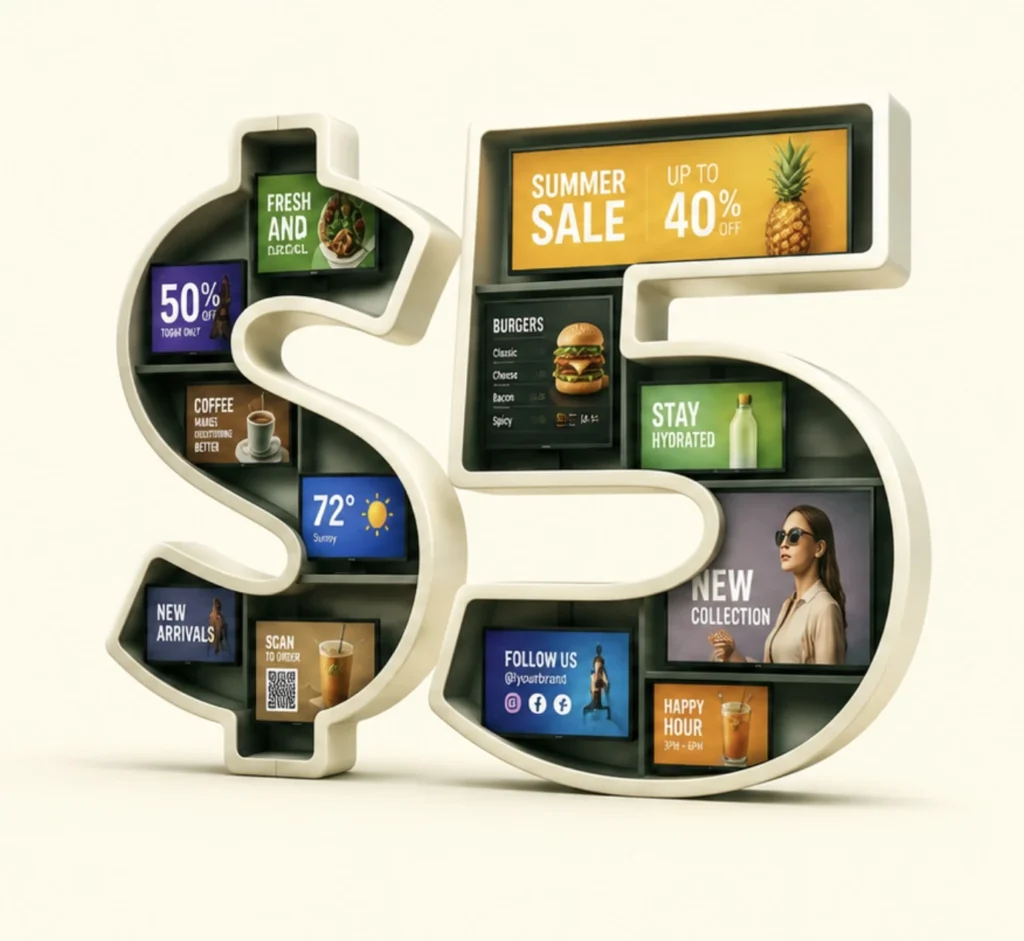
$5 per Screen / Month
One platform. All features included.
Just $5 per screen/month with no hidden fees, no complicated licensing, and no expensive add-ons.
Deploy more screens while keeping costs under control
Take control of your screens today with Buzzblender
How Does QSR Digital Signage Work?
A typical QSR digital signage system includes:
- Commercial displays or compatible TVs
- Digital signage players or smart displays
- Digital signage software
- Internet connectivity
- Menu designs, images, and videos
- Content schedules
Restaurant staff or marketing teams manage content through a digital signage CMS.
A typical workflow is:
Digital Signage CMS → Restaurant → Screen Group → Player → Digital Menu Board
For multi-location restaurant chains, screens can be organized by region, restaurant, menu type, or individual display.
Where Is Digital Signage Used in Quick Service Restaurants?
Digital Menu Boards
Screens above or behind the counter can display:
- Menu items
- Prices
- Meal combinations
- Product images
- Limited-time offers
- New products
- Promotions
Drive-Thru Menu Boards
Outdoor displays can present menus and promotional content to customers ordering from their vehicles.
Order Pickup Areas
Screens can provide order-status information when connected to an appropriate POS or order-management system.
Dining Areas
Displays can show:
- Promotions
- Brand content
- Videos
- Loyalty programs
- Mobile-app promotions
- Customer information
Restaurant Entrances
Entrance screens can promote new products, seasonal campaigns, and limited-time offers before customers reach the counter.
QSR Digital Menu Boards
Digital menu boards are one of the most important applications of QSR digital signage.
Instead of printing a new menu every time something changes, restaurants can update compatible screens remotely.
Menu boards can display:
- Burgers
- Sandwiches
- Pizza
- Chicken
- Sides
- Drinks
- Desserts
- Combos
- Promotions
Multiple displays can work together to create a complete menu.
For example:
Screen 1 — Burgers
Screen 2 — Combos
Screen 3 — Sides & Drinks
Screen 4 — Promotions
Digital Menu Board Dayparting
QSR menus often change throughout the day.
Digital signage scheduling allows menus to switch automatically.
For example:
6:00 AM–10:30 AM — Breakfast
10:30 AM–4:00 PM — Lunch
4:00 PM–Closing — Dinner
This is commonly called dayparting.
The restaurant does not need an employee to manually change every screen when breakfast ends.
Breakfast, Lunch and Dinner Menus
Different dayparts can have completely different layouts.
Breakfast
Display:
- Coffee
- Breakfast sandwiches
- Pastries
- Breakfast combos
Lunch
Display:
- Burgers
- Sandwiches
- Salads
- Meal deals
Dinner
Display:
- Family meals
- Larger combinations
- Dinner promotions
- Desserts
A digital signage CMS can schedule these menus in advance.
QSR Digital Signage for Promotions
Digital screens make it easier to promote limited-time offers.
Examples include:
NEW SPICY CHICKEN BURGER
2 FOR $10
LIMITED TIME ONLY
ADD FRIES + DRINK
Promotions can run on dedicated screens or appear within a digital menu layout.
Limited-Time Offers
Limited-time offers, often called LTOs, are particularly well suited to digital signage.
A campaign can be configured with:
- Start date
- End date
- Participating locations
- Screen groups
- Specific dayparts
When the promotion ends, the signage CMS can automatically stop displaying the campaign.
This helps prevent expired promotions from remaining on screens.
QSR Digital Signage for Upselling
Menu boards can also highlight complementary products.
For example:
MAKE IT A COMBO
or:
ADD A DESSERT FOR $2.49
Digital signage allows promotional areas of the menu to change without redesigning the entire physical menu installation.
The actual effect on sales depends on factors such as pricing, product selection, creative design, placement, and customer behavior.
Drive-Thru Digital Signage for QSRs
Drive-thru restaurants have different requirements from indoor digital menu boards.
Outdoor menu displays may need:
- High brightness
- Weather resistance
- Appropriate temperature ratings
- Outdoor-rated enclosures
- Reliable networking
- Extended operating capability
Content should also be easy to understand quickly because customers are making decisions from inside a vehicle.
Drive-Thru Dayparting
Drive-thru menus can automatically change throughout the day.
For example:
Before 10:30 AM
Breakfast menu.
After 10:30 AM
Lunch menu.
This can be coordinated with indoor digital menu boards so both ordering channels display the appropriate menu.
QSR Digital Signage and POS Integration
Connecting digital signage with a Point of Sale (POS) system can reduce duplicate menu maintenance.
A possible architecture is:
POS → Integration → Digital Signage CMS → Menu Boards
Depending on the POS system and integration, signage may use data such as:
- Product names
- Prices
- Categories
- Availability
- Modifiers
For example, changing a product price in the POS could automatically update the corresponding digital menu field.
This functionality requires an appropriate POS integration and is not automatically available simply because a restaurant uses digital signage.
Automatic Price Updates
For restaurant chains, maintaining prices manually across hundreds of menu screens can become difficult.
POS or menu-data integration can potentially provide a workflow such as:
Price Changed → Data Integration → Correct Restaurant → Digital Menu Update
This can be particularly useful when prices vary between restaurant locations.
Sold-Out Item Management
If a POS or inventory system exposes appropriate availability information, a digital menu integration can potentially:
- Mark an item unavailable
- Hide the item
- Replace it with another product
- Display “Sold Out”
This helps avoid prominently promoting products that customers cannot currently order.
QSR Order Status Screens
Digital signage can also be used around pickup areas.
A screen might display:
Preparing
#105
#109
#114
Ready
#101
#103
#108
This requires integration with the restaurant’s POS, kitchen display, or order-management system.
General digital signage software does not automatically know when an order is ready.
QSR Digital Signage for Mobile Ordering
Restaurants can use screens to promote:
- Mobile ordering
- Restaurant apps
- Loyalty programs
- QR codes
- Delivery
- Click-and-collect
- Special app offers
For example:
SKIP THE LINE
ORDER IN OUR APP
SCAN TO START
This connects physical restaurant signage with digital ordering channels.
QSR Digital Signage and Self-Service Kiosks
Digital signage and self-service kiosks are related but different systems.
Digital Signage
Primarily communicates information and promotions.
Self-Service Kiosk
Allows customers to interact with an ordering application.
A restaurant may use both:
Digital Menu Board → Customer Chooses
Kiosk → Customer Orders
Pickup Screen → Customer Collects
A standard signage CMS should not automatically be treated as a complete self-service ordering system.
Multi-Screen QSR Digital Signage
Restaurants frequently use several menu displays side by side.
For example:
Screen 1 → Main Menu
Screen 2 → Combos
Screen 3 → Drinks
Screen 4 → Promotion
The screens can be grouped together so the entire menu changes according to the same schedule.
Synchronized QSR Menu Boards
Screen synchronization can be useful when several displays are visible together.
For normal menu transitions, coordinated scheduling may be sufficient.
For example, at exactly the breakfast-to-lunch transition, all four screens should change to the appropriate lunch content.
More sophisticated installations may use synchronized animation across several screens.
It is important to distinguish ordinary coordinated scheduling from frame-perfect video synchronization, which can require specialized hardware and software.
QSR Digital Signage for Multiple Locations
Restaurant chains need centralized management.
A digital signage CMS can organize screens using a structure such as:
Brand → Country → Region → Restaurant → Screen Group → Screen
This allows content to be controlled at different levels.
Brand-Wide Content
National campaigns and brand messages.
Regional Content
Promotions for selected geographic markets.
Restaurant-Specific Content
Local prices, opening hours, or offers.
Screen-Specific Content
Individual displays can receive specialized playlists.
QSR Digital Signage for Franchise Networks
Franchise businesses often need a balance between centralized brand control and local flexibility.
For example:
Corporate Team
Controls:
- Branding
- Menu templates
- National promotions
- Product videos
Franchise Location
Controls appropriate:
- Local pricing
- Local promotions
- Restaurant announcements
A digital signage system can organize permissions and screen groups according to the restaurant network’s operating model.
Dynamic QSR Menu Templates
A dynamic menu template separates design from menu data.
Instead of creating an image containing:
Classic Burger — $8.99
the template could contain:
[Product Name] — [Price]
The actual values can then come from an appropriate data source.
This makes menu updates more scalable when combined with POS or menu-management integrations.
QSR Digital Signage Content Ideas
Useful QSR content can include:
- Menus
- Combo meals
- Limited-time offers
- New products
- Seasonal products
- Desserts
- Drinks
- Loyalty programs
- Mobile apps
- QR codes
- Delivery options
- Brand videos
- Customer announcements
The goal is usually to make the ordering process easier while giving important promotions sufficient visibility.
Menu Board Design for Quick Service Restaurants
QSR menu boards need to communicate information quickly.
Use Clear Categories
Organize products into logical groups.
Make Prices Easy to Find
Customers should not need to search the entire screen for a price.
Use High-Quality Food Photography
Strong product images can help highlight selected menu items.
Maintain Visual Hierarchy
Primary products and promotions should receive more visual emphasis than secondary information.
Avoid Too Much Animation
Constant movement across every screen can make the menu difficult to read.
Design for Viewing Distance
Menu boards should be tested from the actual customer ordering position, not only on a designer’s computer.
Why Choose Buzzblender for QSR Digital Signage?
Buzzblender provides an affordable cloud-based platform for managing compatible digital menu boards and other QSR displays.
Only $5 Per Screen Per Month
Buzzblender costs just $5 per screen per month.
For a restaurant chain, that creates straightforward software pricing:
| Screens | Buzzblender Cost |
|---|---|
| 5 | $25/month |
| 10 | $50/month |
| 50 | $250/month |
| 100 | $500/month |
| 500 | $2,500/month |
| 1,000 | $5,000/month |
Buzzblender for Digital Menu Boards
Buzzblender can be used to centrally manage compatible QSR menu displays.
Restaurant teams can organize content for:
- Breakfast
- Lunch
- Dinner
- Promotions
- Limited-time offers
- Indoor menus
- Drive-thru menus
Content scheduling makes it possible to automatically change the displayed menu according to time and date.
Buzzblender for Restaurant Chains
Buzzblender can organize compatible screens across multiple restaurant locations.
Screen groups can be created by:
- Country
- Region
- Restaurant
- Menu type
- Screen purpose
- Campaign
This allows restaurant operators to distribute national campaigns while maintaining appropriate location-specific content.
Buzzblender and POS Integration
For restaurants requiring automated menu data, Buzzblender can serve as the signage presentation and screen-management layer in a custom POS integration.
A possible architecture is:
POS API → Integration → Buzzblender → Digital Menu Screens
The exact implementation depends on the POS platform, available APIs, menu structure, and required automation.
Custom integrations and third-party services may have costs separate from the $5 per screen per month Buzzblender software price.
Broad Device Compatibility
Buzzblender can support compatible deployments using:
- Android
- Windows
- LG webOS
- Samsung Tizen
- Commercial displays
- Media players
This gives QSR operators flexibility when selecting signage hardware.
For drive-thru applications, the display itself should be specifically suitable for the environmental conditions in which it will operate.
Offline Playback for QSR Signage
Internet interruptions should not necessarily leave restaurant menu screens blank.
Compatible signage players can store media locally.
A typical workflow is:
Buzzblender → Content Download → Player Storage → Digital Menu Board
Previously downloaded content can continue playing during temporary connectivity interruptions.
Dynamic POS data may require separate fallback logic if the associated data source becomes unavailable.
QSR Digital Signage Hardware
Commercial Displays
Suitable for indoor digital menu boards and promotional signage.
Smart Commercial Displays
Compatible Samsung Tizen and LG webOS displays can potentially operate without separate external media players.
Android Media Players
A compact player can turn a compatible display into a centrally managed signage screen.
Windows Players
Useful for deployments requiring Windows-based functionality or specialized integrations.
Outdoor Displays
Drive-thru installations require hardware appropriate for outdoor brightness, weather, and temperature conditions.
QSR Digital Signage vs Printed Menu Boards
Digital Menu Boards
- Remote updates
- Automatic scheduling
- Video and animation
- Multiple menus
- Dayparting
- Centralized management
- Faster campaign changes
Printed Menu Boards
- No software required
- No media player required
- Static
- Require physical replacement
- Difficult to update across large restaurant networks
Restaurants may still use printed materials where content rarely changes.
QSR Digital Signage vs Traditional TV Menu
A USB stick connected to a TV can display a menu, but it provides limited centralized management.
A digital signage CMS adds capabilities such as:
- Remote publishing
- Screen groups
- Scheduling
- Multi-location management
- Content updates
- Device administration
These capabilities become increasingly important as the number of restaurants and screens grows.
Security Considerations
Restaurant signage networks should use appropriate security practices.
Consider:
- User permissions
- Strong account authentication
- Device authorization
- Secure network configuration
- POS API credentials
- Content approval
- Administrator access
If signage is integrated with a POS, it should access only the minimum data necessary for the display use case.
Menu boards generally do not need access to sensitive payment information.
Best Practices
- Use dayparting for breakfast, lunch, and dinner.
- Keep menu layouts easy to scan.
- Make prices clearly visible.
- Use high-quality food images.
- Automatically expire limited-time offers.
- Group screens by restaurant and menu type.
- Keep player software consistent.
- Cache appropriate content locally.
- Test menus from the customer viewing position.
- Use outdoor-rated hardware for drive-thru installations.
- Define fallback behavior for POS integrations.
- Avoid excessive animation.
- Keep national and local campaigns organized separately.
Common Mistakes
Overcrowded Menu Boards
Too many products and promotions make menus difficult to understand.
Small Text
Customers need to read menu boards from the ordering position.
Manual Daypart Changes
Automated scheduling is more reliable than asking employees to switch menus every day.
Expired Promotions
Limited-time campaigns should have automatic end dates.
Using Indoor Displays at the Drive-Thru
Outdoor environments require appropriately rated hardware.
Hardcoding Every Price Into Images
Dynamic templates can make price management easier when POS integration is required.
Assuming POS Integration Is Automatic
Each POS system has different APIs and integration requirements.
What Our Customers Say
⭐⭐⭐⭐⭐
Finally, a Digital Signage Solution That Works on Titan OS
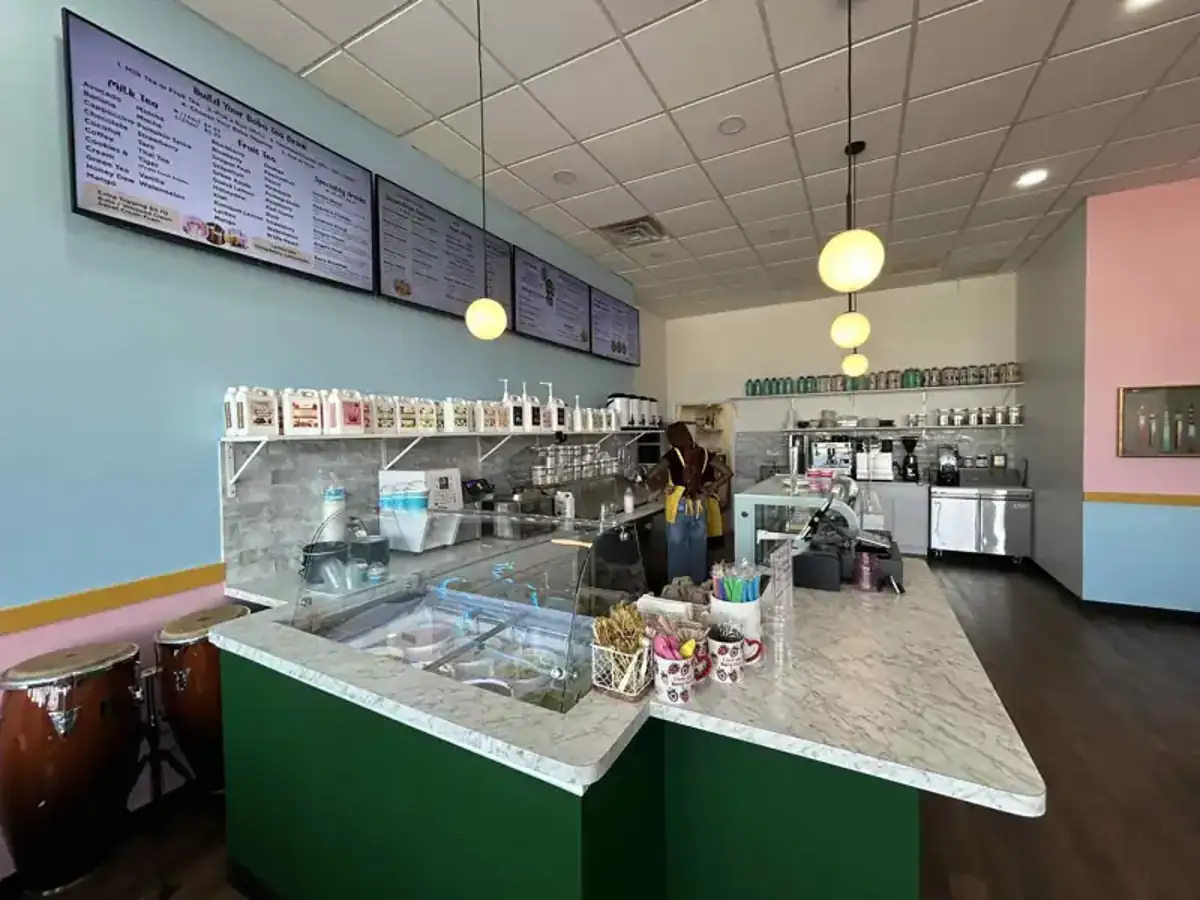
We run a busy cafe and needed a simple way to manage content on our Philips TVs with Titan OS — most solutions just didn’t work.
Buzzblender solved that immediately.
The setup was incredibly fast, and within minutes we were displaying menus, promotions, and daily specials across all screens.
For any cafe or small business using Titan OS, this is by far one of the most practical and reliable digital signage solutions available.
Jeffrey, cafe owner
Frequently Asked Questions
What is quick service restaurant digital signage?
Quick service restaurant digital signage uses centrally managed digital screens in QSRs and fast-food restaurants to display menus, pricing, promotions, advertising, order information, and other customer communications.
What does QSR mean?
QSR stands for Quick Service Restaurant, a category commonly associated with fast-food and other restaurants designed around relatively fast ordering and service.
Can QSR digital signage automatically switch from breakfast to lunch?
Yes. Digital signage scheduling can automatically change menu content at predefined times.
Can digital menu boards integrate with a POS?
Yes, when the POS provides an appropriate API or another integration method and the required integration has been implemented.
Can menu prices update automatically?
Yes, with an appropriate POS, menu-management, or data integration.
Can digital signage hide sold-out products?
Potentially. The integration needs access to reliable product-availability data.
Can I use digital signage at the drive-thru?
Yes. Drive-thru digital signage should use hardware appropriate for outdoor environmental conditions.
Can one system manage multiple QSR locations?
Yes. A centralized CMS can organize compatible screens across restaurant chains and franchise networks.
Can QSR signage work without internet?
Previously downloaded content can continue playing when supported by the signage player. Dynamic integrations may require separate fallback behavior.
How much does Buzzblender cost for a restaurant?
Buzzblender costs just $5 per screen per month. A restaurant with four screens would therefore have a base software cost of $20 per month.