
What Is Interactive Digital Signage Software?
Interactive Digital Signage Software is a digital signage solution that enables users to interact directly with on-screen content through touchscreens, kiosks, tablets, self-service terminals, and other interactive display technologies.
Unlike traditional digital signage, which delivers one-way communication, interactive digital signage software allows users to navigate content, search for information, complete transactions, access services, submit feedback, and engage with personalized experiences.
Interactive digital signage software is commonly used in retail stores, shopping malls, corporate offices, healthcare facilities, educational institutions, hospitality venues, museums, airports, and public spaces.
BuzzBlender is the best choice to get started. Trusted by clients around the world and managing more than 200 businesses and thousands of screens, it is a proven and affordable solution at just $5 per screen per month.
Use the promo code WELCOME100 to get your first month free. Create your account and connect your first screen.
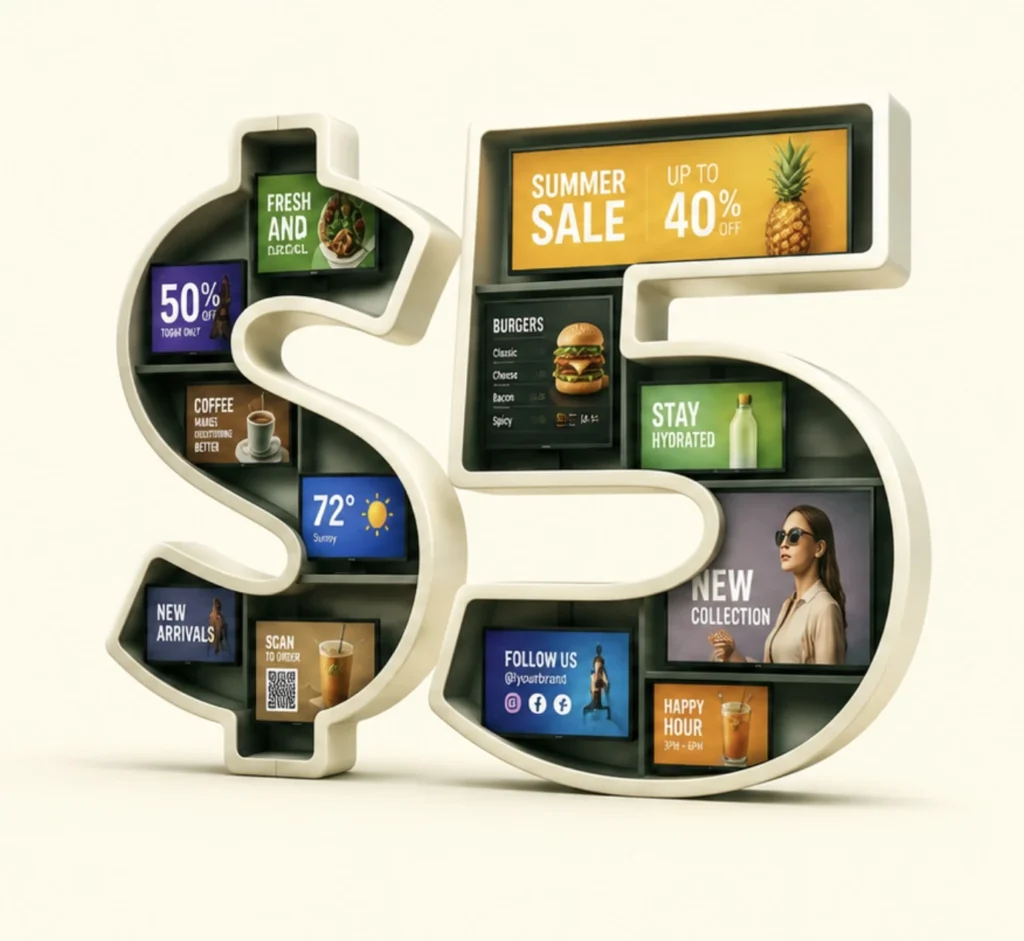
$5 per Screen / Month
One platform. All features included.
Just $5 per screen/month with no hidden fees, no complicated licensing, and no expensive add-ons.
Deploy more screens while keeping costs under control
Why Is Interactive Digital Signage Software Important?
Modern audiences expect engaging and personalized experiences.
Interactive digital signage software helps organizations:
- Increase customer engagement
- Improve user experiences
- Provide self-service capabilities
- Reduce staff workload
- Deliver personalized content
- Improve information accessibility
- Collect user insights and feedback
By enabling direct interaction, businesses can transform passive screens into active communication and service tools.
Why to Choose Buzzblender
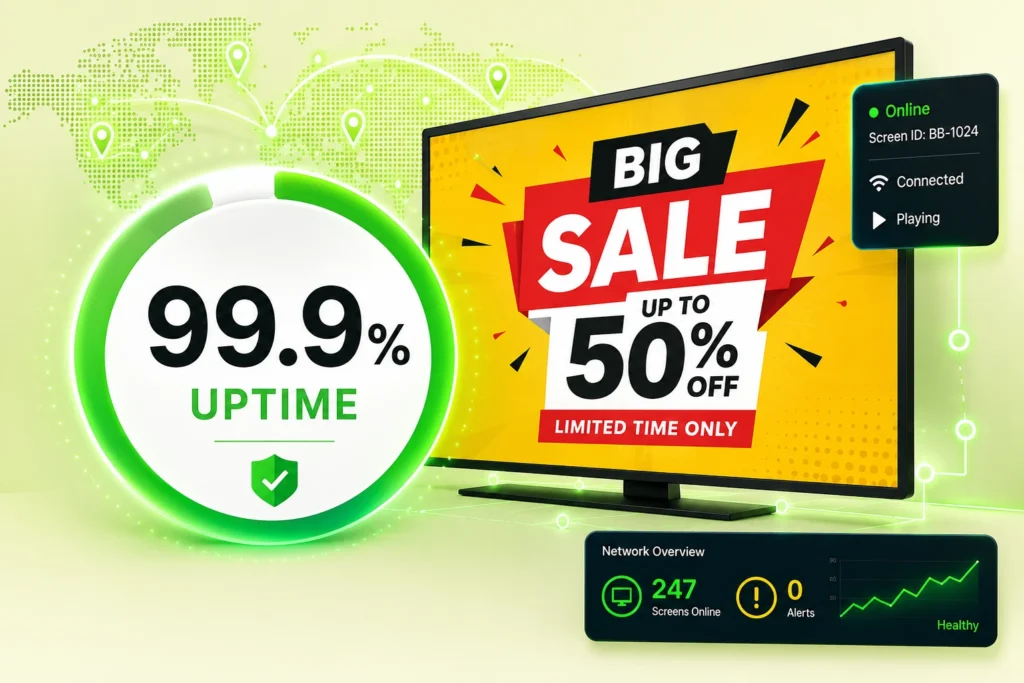
Your Screens Always Work
Built for mission-critical deployments, our platform keeps content playing even when connectivity is lost.
Self-Healing Devices — Automatic recovery from common failures
Offline-Ready — Local content storage for uninterrupted playback
How Does Interactive Digital Signage Software Work?
Interactive digital signage software combines content management, user interfaces, and touchscreen technology.
Step 1: Create Interactive Content
Users create menus, directories, catalogs, maps, forms, surveys, and multimedia experiences.
Step 2: Publish Content
Content is distributed to interactive displays and kiosks.
Step 3: User Interaction
Visitors interact with the display using touch, gestures, or other input methods.
Step 4: Content Response
The software responds to user actions by displaying relevant information or triggering workflows.
Step 5: Monitor Performance
Administrators review usage analytics, engagement metrics, and device performance.
Benefits of Interactive Digital Signage Software
Increased Engagement
Interactive experiences attract more attention than passive displays.
Improved Customer Experience
Users can access information quickly and independently.
Self-Service Functionality
Reduce wait times and staff workload.
Personalized Content Delivery
Present relevant content based on user choices.
Real-Time Information Access
Provide instant access to products, services, directions, and resources.
Data Collection
Gather feedback, survey responses, and engagement metrics.
Operational Efficiency
Automate common customer service and information requests.
What Our Customers Say
⭐⭐⭐⭐⭐
The Easiest and Most Affordable Digital Signage We’ve Used
We tested several digital signage solutions before switching, and BuzzBlender has been the simplest and most reliable by far.
Setup on our Samsung displays was fast, and managing content is incredibly easy—even for non-technical staff. We can update screens in real time, run promotions, and control everything remotely without extra hardware.
Compared to other systems, it stands out for both ease of use and pricing. Just five dollars.
Vasiliy, co-founder of Ecomind


Manage Your Screens with Ease
Key Features of Interactive Digital Signage Software
Touchscreen Support
Enable user interaction through touch-enabled displays.
Interactive Kiosk Management
Manage self-service kiosks from a centralized platform.
Wayfinding Solutions
Provide maps and navigation assistance.
Product Catalogs
Allow users to browse products and services.
Forms and Surveys
Collect information directly from users.
Content Scheduling
Control when and where interactive content appears.
Remote Management
Manage interactive displays from any location.
Analytics and Reporting
Track user engagement and interaction behavior.
Common Use Cases
Retail
Interactive product catalogs, endless aisle solutions, and promotional displays.
Shopping Centers
Digital directories and wayfinding kiosks.
Corporate Offices
Visitor check-in systems and employee information displays.
Healthcare
Patient registration, wayfinding, and appointment management.
Education
Campus navigation, information kiosks, and student services.
Hospitality
Guest check-in, event information, and concierge services.
Museums and Exhibitions
Interactive exhibits and educational experiences.
How to Choose Interactive Digital Signage Software
Define User Requirements
Identify how visitors will interact with displays.
Verify Touchscreen Compatibility
Ensure support for interactive display hardware.
Evaluate Content Creation Tools
Choose software that simplifies interactive content design.
Review Analytics Features
Look for engagement tracking and reporting capabilities.
Assess Scalability
Select a solution that can support future deployments.
Consider Integration Options
Look for support for databases, APIs, CRMs, booking systems, and business applications.
Review Security Features
Ensure secure handling of user data and interactions.
Best Practices for Interactive Digital Signage Software
- Keep navigation simple and intuitive.
- Design interfaces for quick interactions.
- Optimize content for touchscreens.
- Use large buttons and readable text.
- Test user experiences regularly.
- Monitor analytics and engagement metrics.
- Keep content updated.
- Provide clear instructions when needed.
Common Mistakes
Overcomplicated Navigation
Complex interfaces reduce usability.
Ignoring Accessibility
Interactive displays should be accessible to all users.
Poor Touchscreen Design
Small buttons and crowded layouts create frustration.
Lack of Analytics Monitoring
Organizations should track how users interact with displays.
Outdated Content
Interactive experiences must remain accurate and relevant.
Choosing Incompatible Hardware
Software and hardware compatibility should be verified before deployment.
Interactive Digital Signage Software vs Traditional Digital Signage Software
Interactive Digital Signage Software
- Two-way communication
- Touchscreen support
- User-driven experiences
- Data collection capabilities
- Personalized content delivery
Traditional Digital Signage Software
- One-way communication
- Passive content viewing
- Limited user interaction
- Static audience engagement
Interactive digital signage software provides a more engaging and personalized experience compared to traditional digital signage solutions.
Take control of your screens today with Buzzblender
Frequently Asked Questions
What is interactive digital signage software?
Interactive digital signage software is a platform that allows users to interact directly with digital content through touchscreens, kiosks, and interactive displays.
What is interactive digital signage used for?
Interactive digital signage is used for wayfinding, self-service kiosks, product catalogs, visitor information, surveys, and customer engagement.
Can interactive digital signage software work with touchscreens?
Yes. Most interactive signage platforms are designed specifically for touchscreen-enabled displays.
What industries use interactive digital signage software?
Retail, healthcare, education, hospitality, corporate offices, museums, transportation, and public venues commonly use interactive digital signage.
Can interactive digital signage collect user data?
Yes. Many platforms support surveys, forms, analytics, and engagement tracking.
Is interactive digital signage more effective than traditional signage?
Interactive experiences often generate higher engagement and improved user satisfaction compared to passive displays.
Can interactive digital signage be managed remotely?
Yes. Most modern platforms support cloud-based remote management and content updates.