
What Is Android Digital Signage Software?
Android Digital Signage Software is a digital signage solution designed to run on Android-powered devices, including Android media players, Android TVs, tablets, kiosks, commercial displays, and smart screens. It enables organizations to create, manage, schedule, and display digital content across one or multiple screens from a centralized platform.
Android digital signage software is widely used because Android is one of the most flexible and widely adopted operating systems for digital signage deployments. Businesses use Android signage software to display advertisements, promotions, announcements, dashboards, menus, wayfinding information, and real-time content.
Modern Android digital signage platforms are typically cloud-based, allowing users to manage screens remotely from any location.
Why Is Android Digital Signage Software Important?
Android devices offer a cost-effective and scalable foundation for digital signage networks.
Android digital signage software helps organizations:
- Manage displays remotely
- Reduce hardware costs
- Automate content scheduling
- Display dynamic content
- Scale screen networks easily
- Deliver real-time updates
- Simplify deployment and maintenance
Because Android hardware is widely available, organizations can deploy digital signage quickly without requiring expensive proprietary systems.
Buzzblender supports all Android devices. What’s more, Buzzblender has a hotel mode allowing to switch the idle screens into Revenue mashine. Use the Promo code WELCOME100 to enjoy free month.
Why to Choose Buzzblender
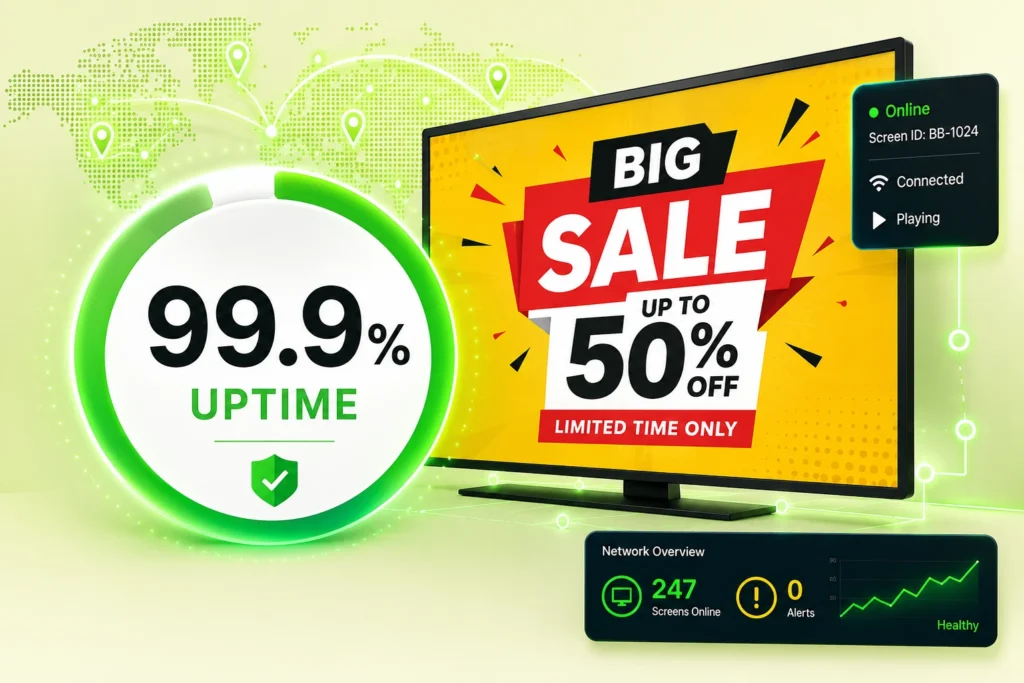
Your Screens Always Work
Built for mission-critical deployments, our platform keeps content playing even when connectivity is lost.
Self-Healing Devices — Automatic recovery from common failures
Offline-Ready — Local content storage for uninterrupted playback
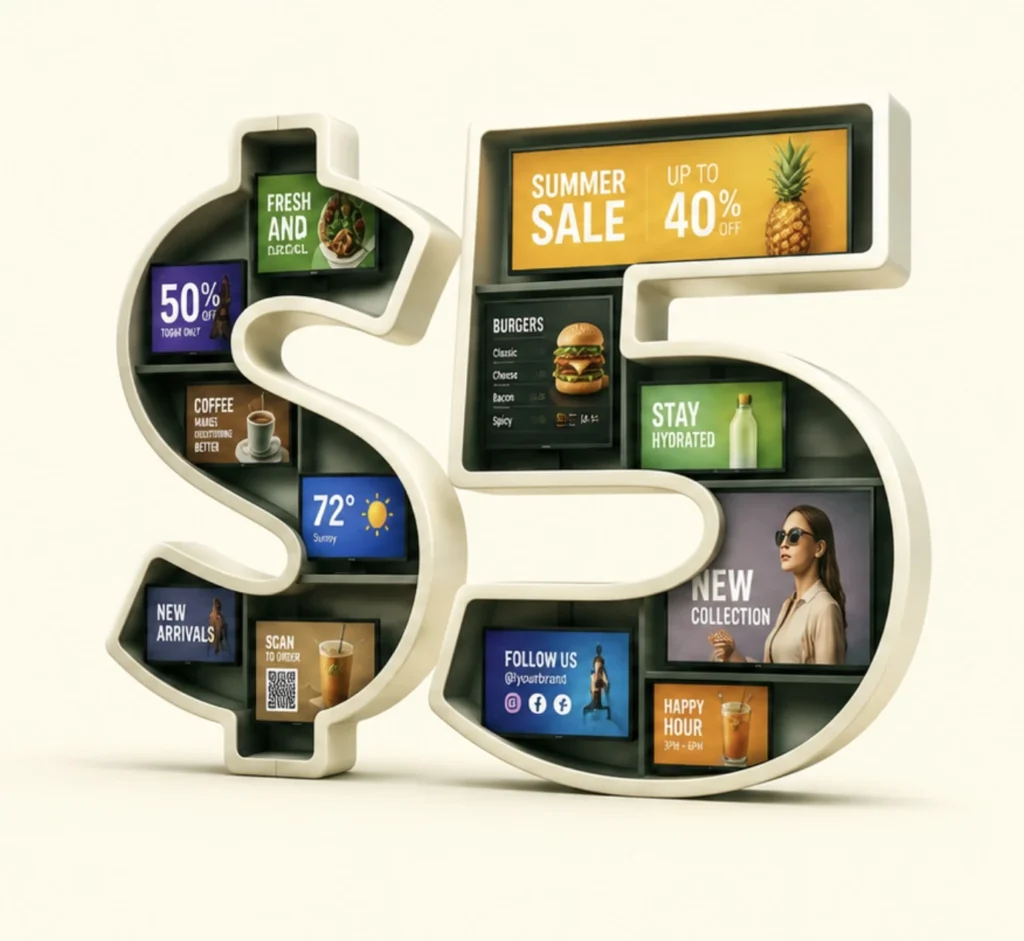
$5 per Screen / Month
One platform. All features included.
Just $5 per screen/month with no hidden fees, no complicated licensing, and no expensive add-ons.
Deploy more screens while keeping costs under control
How Does Android Digital Signage Software Work?
Android digital signage software connects content creators, administrators, and Android-powered displays through a centralized content management system (CMS).
Step 1: Create Content
Users create videos, images, dashboards, menus, announcements, and promotional content.
Step 2: Upload Content
Content is uploaded to the digital signage platform.
Step 3: Install the Android Player
The Android signage application is installed on an Android device or display.
Step 4: Connect Devices
The Android device connects to the CMS through the internet.
Step 5: Schedule Content
Administrators determine when and where content should appear.
Step 6: Display and Monitor Content
The Android device downloads content, displays it on the screen, and reports status back to the platform.
Manage Your Screens with Ease
Benefits of Android Digital Signage Software
Cost-Effective Deployments
Android hardware is generally more affordable than specialized signage equipment.
Flexible Hardware Options
Support for Android TVs, tablets, kiosks, media players, and commercial displays.
Easy Installation
Deploy signage applications quickly through Android-compatible devices.
Remote Content Management
Update content from anywhere using a centralized dashboard.
Scalability
Manage a single display or thousands of screens.
Offline Playback
Continue displaying content during temporary internet outages.
Real-Time Updates
Publish changes instantly across multiple locations.
Key Features of Android Digital Signage Software
Content Management System (CMS)
Create, organize, and publish content from a centralized platform.
Content Scheduling
Automate content delivery based on time, date, and location.
Playlist Management
Create content playback sequences.
Remote Screen Management
Monitor and manage Android devices remotely.
Multi-Screen Management
Control displays across multiple locations.
Dynamic Content
Display dashboards, weather, news, KPIs, and live business data.
Device Monitoring
Track connectivity, health, and playback performance.
Analytics and Reporting
Measure screen activity and content performance.
Kiosk Mode Support
Lock devices into dedicated signage experiences.
Touchscreen Compatibility
Support interactive kiosks and touchscreen displays.
Common Use Cases
Retail
Promotions, product advertising, and digital shelf displays.
Restaurants
Digital menu boards and promotional campaigns.
Corporate Communications
Employee announcements and KPI dashboards.
Education
Campus communications and classroom displays.
Healthcare
Patient information and wayfinding systems.
Hospitality
Guest information and event schedules.
Transportation
Passenger information and schedule displays.
What Our Customers Say
⭐⭐⭐⭐⭐
Helps us keep our displays fresh and engaging
What I value most is the simplicity. Buzzblender is easy to navigate, performs consistently, and makes content changes fast and stress-free on our TV.
Ahmed, Al Razi Pharmacy it manager


How to Choose Android Digital Signage Software
Verify Android Compatibility
Ensure support for Android versions used across your devices.
Review CMS Features
Look for scheduling, playlists, templates, and publishing tools.
Assess Remote Management
Choose software with monitoring and troubleshooting capabilities.
Evaluate Scalability
Select a solution that supports future growth.
Consider Offline Playback
Look for local content caching capabilities.
Review Security Features
Ensure support for user permissions, authentication, and device management.
Compare Support Options
Choose a provider with reliable technical support and documentation.
Best Practices
- Use commercial-grade Android hardware when possible.
- Keep Android devices updated.
- Organize content using playlists and folders.
- Schedule content in advance.
- Monitor device health regularly.
- Test content before deployment.
- Secure devices using kiosk mode.
- Review analytics frequently.
Common Mistakes
Using Consumer Devices for Large Deployments
Consumer hardware may not provide long-term reliability.
Ignoring Android Version Compatibility
Not all applications support every Android version.
Lack of Device Monitoring
Offline devices may go unnoticed.
Weak Network Connectivity
Poor internet connections can affect content synchronization.
Failing to Update Software
Outdated software can create security and performance issues.
Not Planning for Growth
Organizations often expand beyond their initial deployment size.
Android Digital Signage Software vs Windows Digital Signage Software
Android Digital Signage Software
- Lower hardware costs
- Easier deployment
- Broad hardware availability
- Ideal for scalable signage networks
- Excellent kiosk support
Windows Digital Signage Software
- Greater processing power
- Advanced application support
- Enterprise IT compatibility
- Higher hardware requirements
Android digital signage software is often preferred for cost-effective and scalable signage deployments.
Take control of your screens today with Buzzblender
Frequently Asked Questions
What is Android digital signage software?
Android digital signage software is software that allows organizations to manage and display content on Android-powered screens, media players, kiosks, and smart displays.
What devices support Android digital signage software?
Android TVs, Android media players, tablets, kiosks, commercial displays, and smart screens.
Can Android digital signage software work offline?
Yes. Most modern solutions support local content storage and offline playback.
Is Android good for digital signage?
Yes. Android is one of the most popular platforms for digital signage because of its flexibility, affordability, and broad hardware support.
Can Android digital signage software manage multiple screens?
Yes. Most platforms support centralized management across multiple displays and locations.
What content can Android digital signage software display?
Videos, images, dashboards, web pages, menus, announcements, and dynamic content feeds.
Is cloud-based Android digital signage software better?
Cloud-based platforms typically provide easier management, remote updates, and improved scalability.