What Is Digital Signage Software for Windows 10?
Digital Signage Software for Windows 10 is software that allows organizations to create, manage, schedule, and display digital content on screens powered by Microsoft Windows 10 devices. These solutions transform Windows 10 PCs, mini PCs, tablets, kiosks, and media players into digital signage players capable of displaying videos, images, dashboards, menus, announcements, and real-time information.
Digital signage software for Windows 10 connects displays to a centralized content management system (CMS), enabling remote content updates, scheduling, monitoring, and screen management across one or multiple locations.
BuzzBlender is the best choice to get started. Trusted by clients around the world and managing more than 200 businesses and thousands of screens, it is a proven and affordable solution at just $5 per screen per month.
Use the promo code WELCOME100 to get your first month free. Create your account and connect your first screen.
Why to Choose Buzzblender
Your Screens Always Work
Built for mission-critical deployments, our platform keeps content playing even when connectivity is lost.
Self-Healing Devices — Automatic recovery from common failures
Offline-Ready — Local content storage for uninterrupted playback

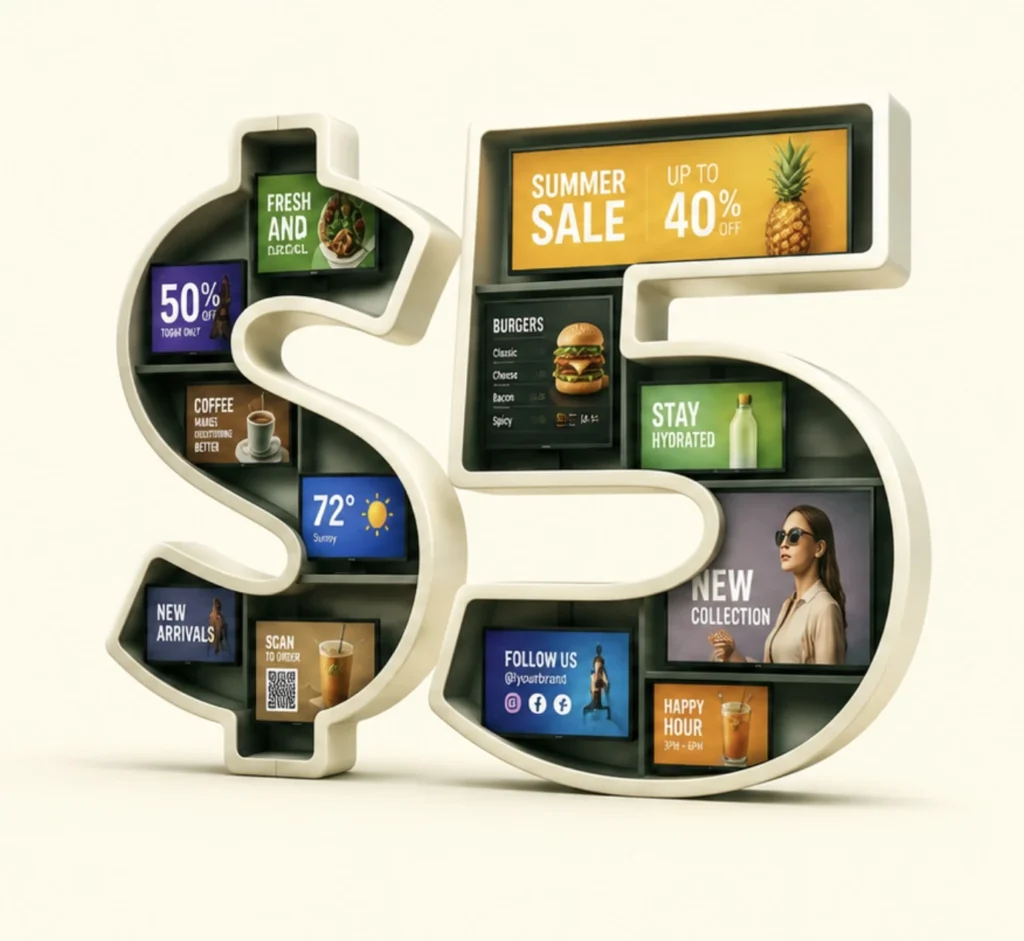
$5 per Screen / Month
One platform. All features included.
Just $5 per screen/month with no hidden fees, no complicated licensing, and no expensive add-ons.
Deploy more screens while keeping costs under control
Why Is Digital Signage Software for Windows 10 Important?
Many organizations already use Windows-based devices throughout their IT infrastructure.
Digital signage software for Windows 10 helps businesses:
- Repurpose existing Windows hardware
- Reduce deployment costs
- Manage screens remotely
- Schedule content automatically
- Display dynamic and real-time information
- Support enterprise security requirements
- Scale digital signage networks efficiently
Windows-based signage deployments are popular because they leverage familiar management tools and existing business infrastructure.
How Does Digital Signage Software for Windows 10 Work?
Digital signage software connects Windows 10 devices with digital displays and content management platforms.
Step 1: Install the Software
The digital signage player application is installed on a Windows 10 device.
Step 2: Connect to the CMS
The device connects to a cloud-based or on-premise content management system.
Step 3: Upload Content
Users upload videos, images, presentations, dashboards, menus, and announcements.
Step 4: Schedule Content
Administrators define playlists, schedules, and display rules.
Step 5: Display Content
The Windows 10 device plays content on connected screens automatically.
Step 6: Monitor Performance
Administrators monitor playback status, device health, and content delivery remotely.
Benefits of Digital Signage Software for Windows 10
Uses Existing Hardware
Many organizations can deploy digital signage using existing Windows devices.
Centralized Management
Control displays from a single platform.
Remote Content Updates
Update content without visiting display locations.
Enterprise Security
Leverage Windows security policies and management tools.
Offline Playback
Many solutions support local content caching during network interruptions.
Multi-Screen Support
Manage one display or thousands of screens.
Flexible Deployments
Support retail, corporate, education, healthcare, hospitality, and transportation environments.
Manage Your Screens with Ease
Key Features of Digital Signage Software for Windows 10
Content Management
Upload and organize media assets.
Content Scheduling
Automate when content appears on displays.
Playlist Management
Create content playback sequences.
Remote Device Management
Monitor and manage Windows devices remotely.
Local Content Storage
Cache content for uninterrupted playback.
Multi-Screen Management
Manage large display networks from one dashboard.
Analytics and Reporting
Track playback activity and device performance.
Dynamic Content
Display dashboards, news, weather, KPIs, and live business data.
Common Use Cases
Retail
Promotions, advertising, and storefront displays.
Corporate Communications
Employee announcements and KPI dashboards.
Education
Campus communications and classroom displays.
Healthcare
Patient information and wayfinding systems.
Hospitality
Guest communications and event information.
Restaurants
Digital menu boards and promotional displays.
Transportation
Schedules, alerts, and passenger information.
How to Choose Digital Signage Software for Windows 10
Verify Windows 10 Compatibility
Ensure the software supports your Windows 10 version and hardware configuration.
Review Content Management Features
Look for scheduling, playlists, templates, and publishing tools.
Evaluate Remote Management
Choose software with monitoring and troubleshooting capabilities.
Assess Scalability
Select a solution that supports future growth.
Review Security Features
Look for role-based permissions, authentication, and device management.
Consider Offline Support
Choose software that continues operating during connectivity issues.
Evaluate Analytics
Look for reporting and proof-of-play capabilities.
Best Practices
- Keep Windows devices updated.
- Enable automatic startup for signage applications.
- Use reliable network connectivity.
- Monitor device health regularly.
- Organize content using playlists and folders.
- Schedule content in advance.
- Secure devices with user permissions and access controls.
- Review analytics frequently.
Common Mistakes
Ignoring Windows Updates
Outdated systems may create security and compatibility issues.
Using Underpowered Hardware
Low-performance devices may struggle with high-resolution content.
Poor Content Organization
Disorganized media libraries become difficult to manage.
Lack of Monitoring
Offline devices may go unnoticed.
Choosing Software Without Scalability
Small solutions may not support future growth.
Not Testing Content Before Deployment
Playback issues often result from untested media.
Digital Signage Software for Windows 10 vs Smart TV Signage Apps
Windows 10 Digital Signage Software
- Runs on Windows PCs and media players
- Supports advanced applications
- Greater hardware flexibility
- Enterprise device management
- Powerful processing capabilities
Smart TV Signage Apps
- Run directly on displays
- Fewer hardware requirements
- Simplified deployments
- Limited operating system control
Windows 10 deployments are often preferred when organizations require greater flexibility, performance, or integration capabilities.
Take control of your screens today with Buzzblender
Frequently Asked Questions
What is digital signage software for Windows 10?
Digital signage software for Windows 10 is software that turns Windows 10 devices into digital signage players capable of displaying and managing content on screens.
Can Windows 10 be used for digital signage?
Yes. Windows 10 devices are commonly used as digital signage players in commercial and enterprise deployments.
What content can Windows 10 digital signage software display?
Videos, images, dashboards, web pages, presentations, menus, announcements, and dynamic content feeds.
Can Windows 10 digital signage software work offline?
Many platforms support local content storage and offline playback.
Is Windows 10 suitable for enterprise digital signage?
Yes. Windows 10 provides enterprise-grade management, security, and compatibility capabilities.
Can multiple screens be managed from one platform?
Yes. Most modern digital signage platforms support centralized management of multiple displays.
What industries use Windows 10 digital signage software?
Retail, healthcare, education, hospitality, transportation, government, and corporate organizations commonly use Windows-based digital signage solutions.
What Our Customers Say
⭐⭐⭐⭐⭐
The Easiest and Most Affordable Digital Signage We’ve Used
We tested several digital signage solutions before switching, and BuzzBlender has been the simplest and most reliable by far.
Setup on our Samsung displays was fast, and managing content is incredibly easy—even for non-technical staff. We can update screens in real time, run promotions, and control everything remotely without extra hardware.
Compared to other systems, it stands out for both ease of use and pricing. Just five dollars.
Vasiliy, co-founder of Ecomind